From a young age I had an affinity for horses, no doubt about it!
I was your typical horse mad child and grew up watching the romantic high country and wild horses in the movie The Man from Snowy River and reading the many chronicles of the Silver Brumby Novels written by Elyne Mitchell. I also grew up with a deep respect and admiration for the history and the role that horses played in WWI and WWII, in particular the Australian Light Horse Infantries. It is this marvelous heritage of the Brumbies that many Australians have fallen in love with and rightly so. Horses have played such an important part in human history as a whole and Australia is no exception. They were our mode of transport, our workers, soldiers of war, our way of living and life, but importantly they were also our comrades and companions, and in many ways they still are today.
Currently Brumbies are literally in the firing line as the Government declare the wild horses an ecological threat and are considering aerial culling practices in an attempt to reduce the populations that are residing within Kosciusko National Park. This has indeed divided the country into pro and anti-brumby groups each pushing their views on the fate of the wild horses.
As a conservationist I understand the need to protect our unique wildlife and environment, and that the wild horses, along with other non-native animals, do not belong in our National Parks and fragile native environments. As a horse lover I am in awe of the wild horses’ spirit and resilience, and find their social structure and behaviour within the herds fascinating and insightful. Ultimately the wild horse population does need to be managed, and it should be done so ethically and humanely.
For years now, NSW Parks and Wildlife Services (NPWS) have been using passive trapping methods and the horses that are not shipped to slaughter are transported out to Brumby Rescue Groups and Sanctuaries for handling and then, sale. Generally the NPWS will move brumbies out in groups of no less than five horses to a rescue group or buyer. While this sounds great for welfare and moves larger numbers out to make way for more incoming, most buyers, unless they are a horse dealer or someone with land to spare, find this impractical. Most are only looking for one or two horses to work with, given that the horses have only had minimal basic handling and are essentially wild. There are also simply not enough homes prepared to take on a wild horse let alone five, and not all will find forever homes as human circumstances often change.
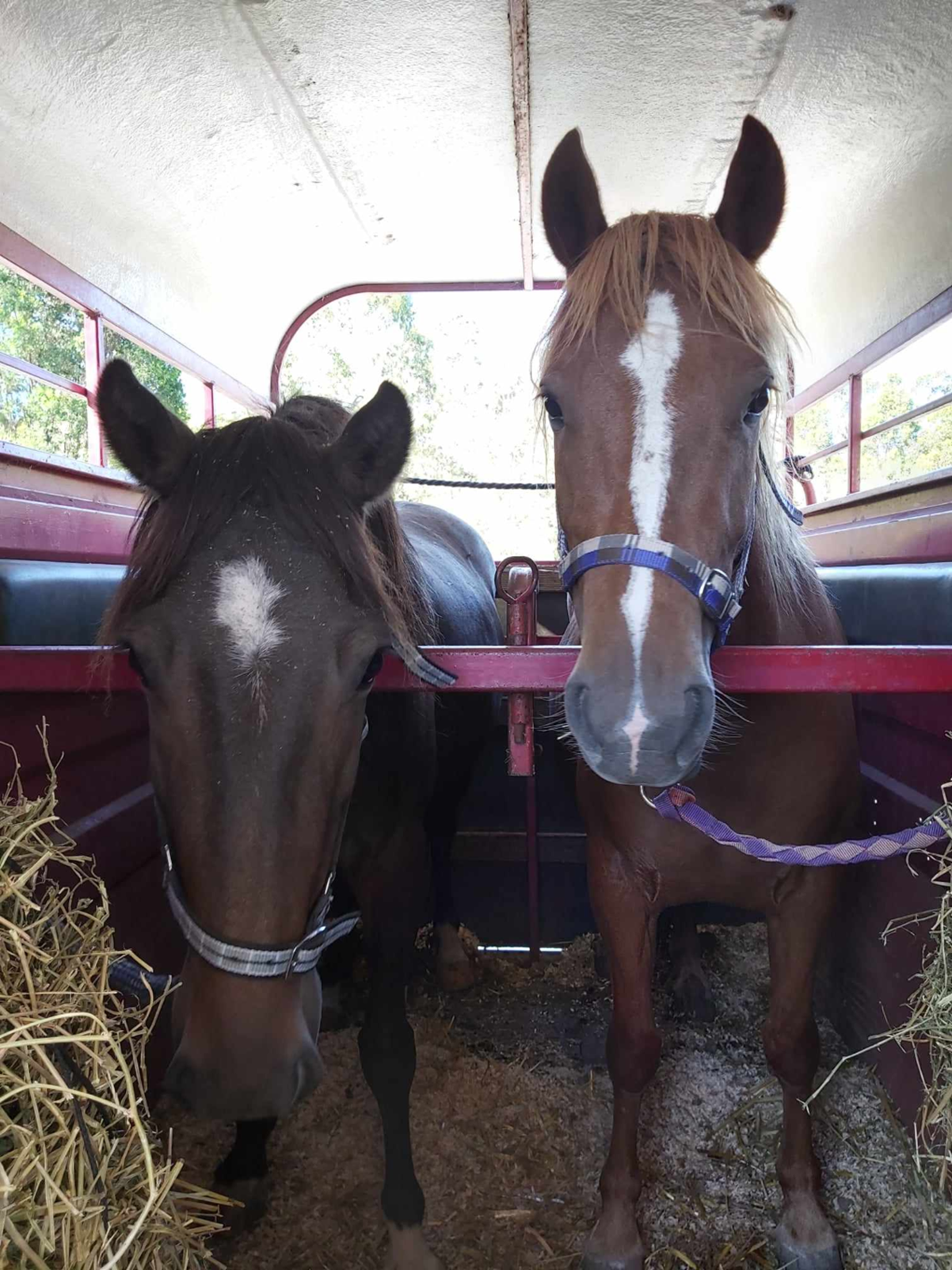
It was because of a change in human circumstances that I was able to purchase two Kosciusko Brumbies. I was simply looking to buy a horse for my horse and it was always a plan that my next horse would be a Brumby as their type would be very suitable for my riding interests. Well, I came home with two!
The story of these two little horses had a rather sad beginning, as they had been trapped together as babies, one a foal and the other a few months older. From the Sanctuary where they were kept, they were then sold to a horse dealer who did not have the best reputation for caring for his horses. Perhaps the Rescue could have screened their buyer a bit more before agreeing to the sale?
It was not long before the two horses were loaded up and shipped to their 2nd home to save the emaciated pair from further neglect and starvation. The new owner thought they would lose the younger of the two as she was very thin and very sick, but with a lot of love and care the two horses’ health and condition returned and they were allowed to roam hundreds of acres with 11 other horses and a mob of cattle. Soon enough the owner was needing to sell their property and move to a smaller one. This now meant reducing the number of livestock and horses. I did not feel it was in the best interest to separate the two, and as I liked them both equally, I bought them together.
Now these horses had very minimal handling, and anything done with them was basic and not exactly had the necessary time put into “preparation and training”. It was simply, ‘This is what you are doing and you will need to do it’. For someone like myself who had only a small amount of knowledge and experience in starting horses, and that was in the Racing Industry, it was a little daunting to now be face to face with starting two Brumbies. Thankfully I had a plan and fundamental tools in place, and that was being dedicated to my preferred method of training I was going to be using, Patience, a basic understanding of horse behaviour, empathy, and an experience equestrian friend and mentor for support and guidance.
I have worked with and owned horses for most of my life, and to be honest, I did not start out with good horsemanship as I was initially taught and knew only the traditional methods of ‘Show the horse who is boss!’ Over the years I have learnt so much more about the science of horse behaviour, having patience, and the power of positive re-enforcement training.
Thankfully, aside of a bit of neglect, the two brumbies have not known harsh treatment, and I am always astonished at how accepting they are of what I ask of them and how forgiving they are when I make a mistake. These two little horses have been teaching me so much on this journey and are not only giving me confidence in my skills and knowledge but are also expanding my horsemanship skills even further. Even with years of horse experience, I have never experienced horses like these Brumbies and they definitely do not behave like a typical domesticated horse.
As the two little horses are still young and growing I am in no hurry to be riding them, so instead taking my time building a relationship with them to instill trust and to form a strong partnership. Their personalities are polar opposite, so the training is adjusted to suit them individually. I look forward to many adventures with these two little horses.
There really does need to be a better wild horse management plan that is beneficial for the long term of the Park, the wildlife and the horses. Periodical slaughter via aerial shooting will result in costing the government more in the long run and will not eradicate horses form the Park.
In Tasmania, deer are partly protected under states wildlife regulations to ensure a healthy population for recreational deer hunting. With deer population blowing out of control, I can’t imagine that protecting these animals is doing the environment any favours either, but hunters pay for the privilege, so money is made to incentivise the protection.
Perhaps government could be incentivised to find more ethical and humane alternatives to aerial shooting of brumbies if they could be monetised by the government into tourism and recreation. Careful planning of gradually moving horses to parts of the park that are not so ecologically fragile where facilities are set up for soft trapping, wild horse workshops, educational trail rides and horse riding camps within the park on brumbies that were born and raised in the Kosciusko ranges.
Imagine the possibilities of a long term solution to managing horse numbers and containing them to more suitable and accessible areas where they can not do further damage. Obviously there are not enough homes for all of the park horses, there never will be, but we have a responsibility to the horses we put there as well as the park and therefore should find a better long term solution that benefits both the environment and the horses.
By: Rachel Sydenham – Animal Care Australia Small Mammals Representative. Originally published: September 2023 ACE Newsletter.


