

Animal Cruelty on Social Media
Have you ever seen a video on social media showing a drowning puppy or a kitten trapped on a highway and wondered why the person filming wasn’t helping the animal?
Or perhaps you have seen a rescue of a pitiful, injured or diseased animal and noticed that the ‘after’ video is clearly an animal of a different size, pattern or colour?
Many of these videos are faked to generate income from social media clicks. Not fake animals or AI videos, but the rescue itself is staged to create social media content.
They are often in the shorts or reels that pop up in your feed from creators that you do not follow. These layouts are designed to catch your attention with short grabs of the full video, to make you curious about what happens next, and shares the most popular videos that relates to things you look at.
Those of us that engage with posts about animals and pets are targets for these kinds of videos.
A report by World Animal Protection Society and Social Media Animal Cruelty Coalition in January this year reviewed more than 1,000 videos on Facebook, YouTube, TikTok, Instagram and X, showing supposedly abandoned animals that were buried or trapped or whose limbs were chained up or were about to drown. More than 600 of those videos had been viewed more than 500 million times.
This is not a small problem.
Just within one week in September 2025, Animal Care Australia saw videos of a puppy tangled in a net with painful injuries, a kitten swimming underneath ice in a canal trying to find a way out, a monkey being bitten by a snake, and a kitten in the middle of a highway with cars dodging it. In all of the videos – after you have watched an animal suffer without intervention for way too long, a “rescuer” runs in to save the animal. Then you see edited footage of the animal being cared for and/or fully recovered, usually at home, and not at a vet.
Often the “after” scenes are really the “before” footage of the animal, and the sad scenes you see at the beginning are, in reality, the animal’s last moments. Most are unlikely to have survived their ordeals. These animals are put into dangerous situations on purpose to film their “rescue”. The creators are literally causing the animal harm and suffering to get you to click on their video. And hundreds of millions of people are clicking on these videos and reacting with positive comments. Sometimes the video is meant to be funny, but shows an animal being injured, or attacked by another animal. I see this often with horse videos.
Even people commenting to notify others that the rescue is fake are helping to increase the popularity of the video. “Rage Bait” is the name given to videos intended to get a reaction (any reaction) from people. Social media shares popular videos regardless of whether people are happy or angry about them. Not engaging with them (not clicking on them) is the best way to beat the algorithm.
Much of this content is created outside of Australia, and not subject to our animal cruelty laws. You might have noticed a large number of videos are of monkeys, cats and dogs (strays are abundant and easy to find in many countries), but can also be of rabbits, reptiles, and ducks. Often times the same animal is abused over and over for different videos and you may start to recognise them.
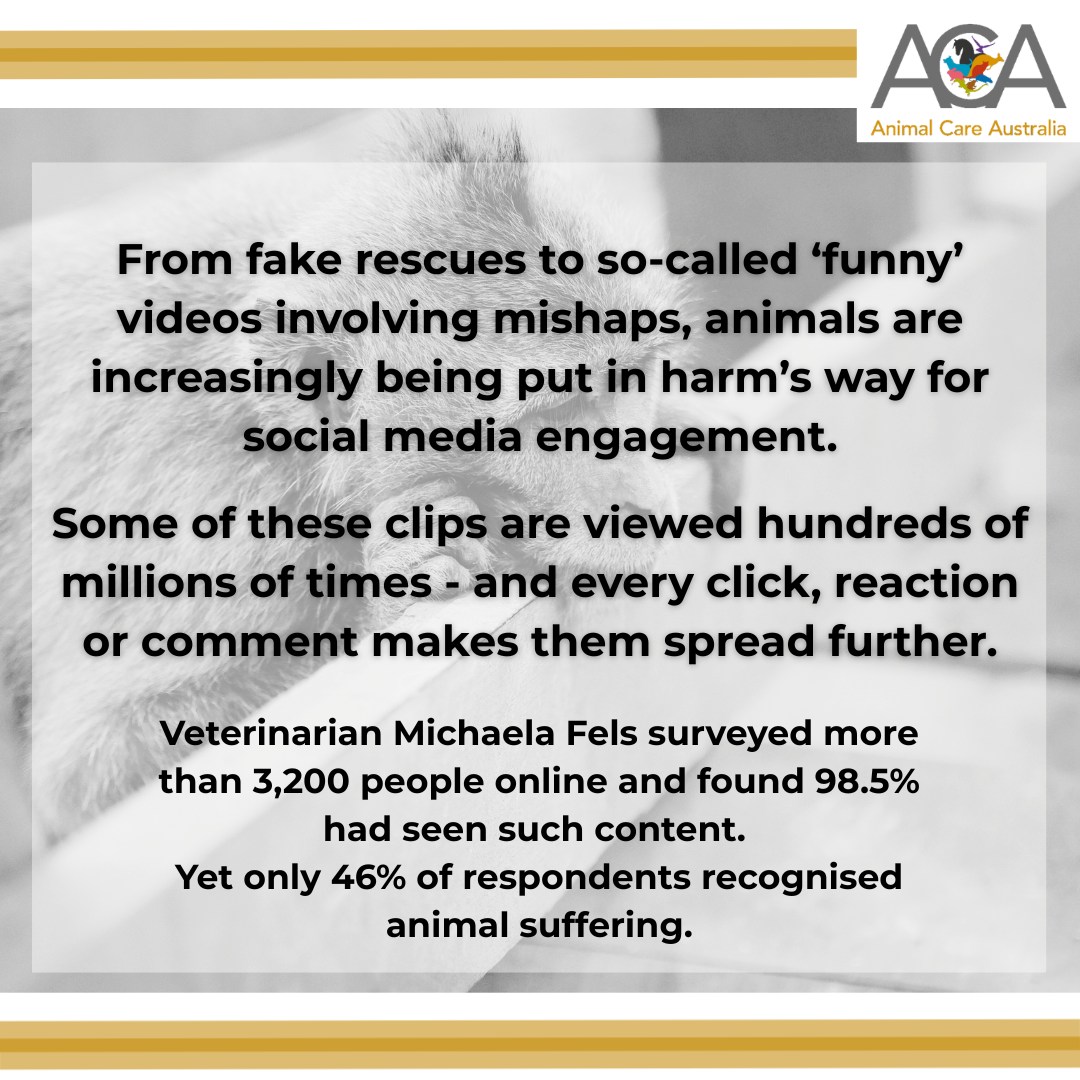
Veterinarian Michaela Fels, a university research assistant at the University of Veterinary Medicine, Hannover, surveyed more than 3,200 people online and found 98.5% had already seen such content. Yet only 46% of respondents recognised animal suffering.
They are horrific videos, especially when you know they were staged and filmed deliberately to get clicks.
One of our concerns here is there are just so many of these videos and there is no way to opt out of seeing them.
So, what is the purpose of all of these fake rescue videos? It’s about money, of course. The videos are usually asking for donations, or are attached to adverts. On some platforms such as YouTube, just having large numbers of clicks will generate income. One report by Four Paws in 2020 said some 2,000 fake rescue videos on YouTube potentially earned up to $US15 million.
I’ve read many tips online on how to spot these fake rescue videos, but really there is one very easy way to tell: notice how long the animal is filmed suffering without anyone taking action to help. Notice when they are filming something abnormally mundane before an animal appears in shot and needs rescuing. (Who films garbage bags in an alley, if they didn’t know there were kittens tied up inside the bag beforehand?) When a normal person sees an animal in danger or suffering, they don’t pull out their phone and film for while – they jump into action, and maybe film something about it later!
So, what can you do to help?
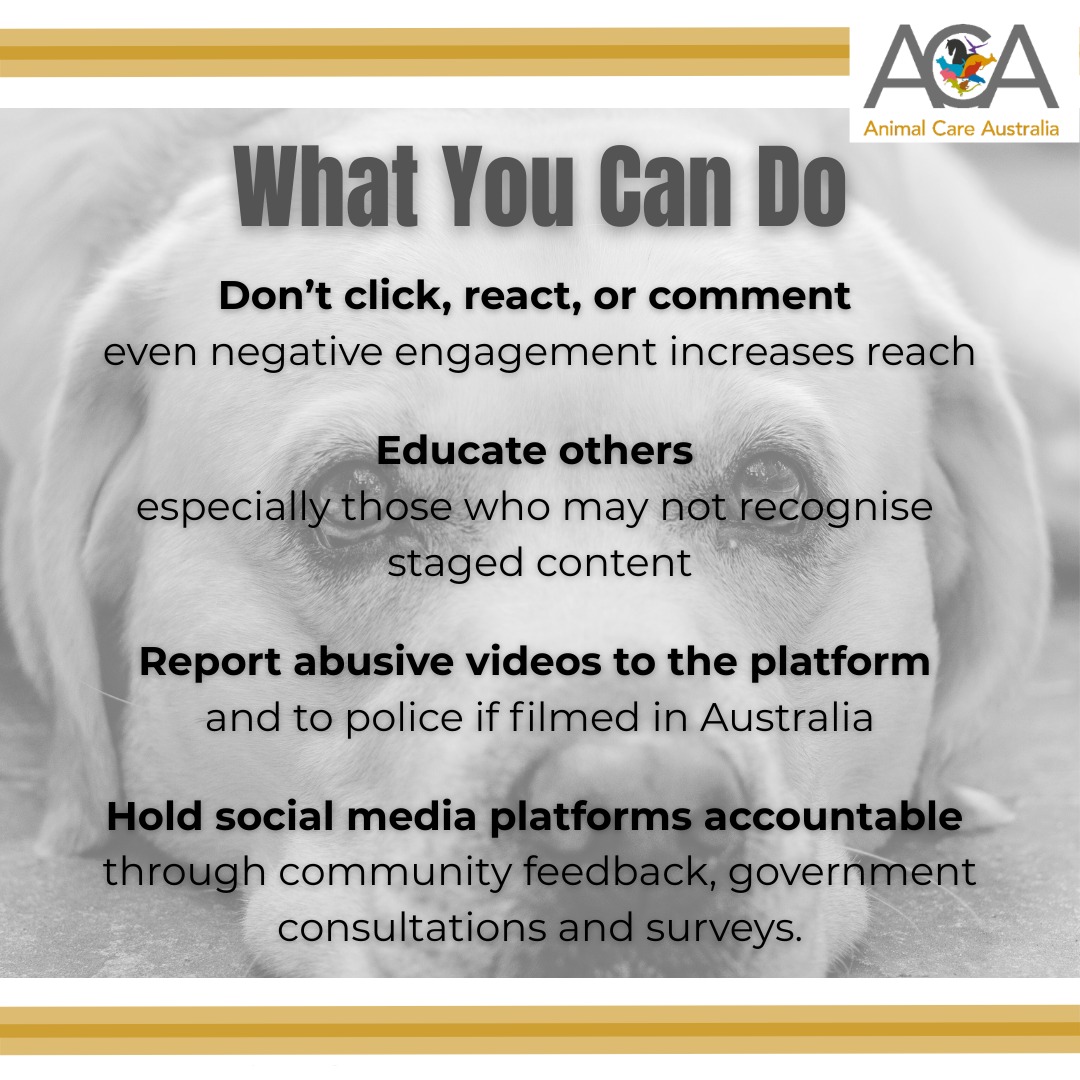
- Tell your friends! Especially older users of social media who don’t realise the videos are fake and may be donating money to help! These videos depend on good hearted people to scam.
- Not clicking on the videos is the best thing, as it reduces the numbers of views the video receives. Clicks = money in many instances. Educating your friends helps reduce the number of clicks. Never react or comment on the videos, as any like or comment, even if its negative, feeds the social media algorithm to share the video to more people.
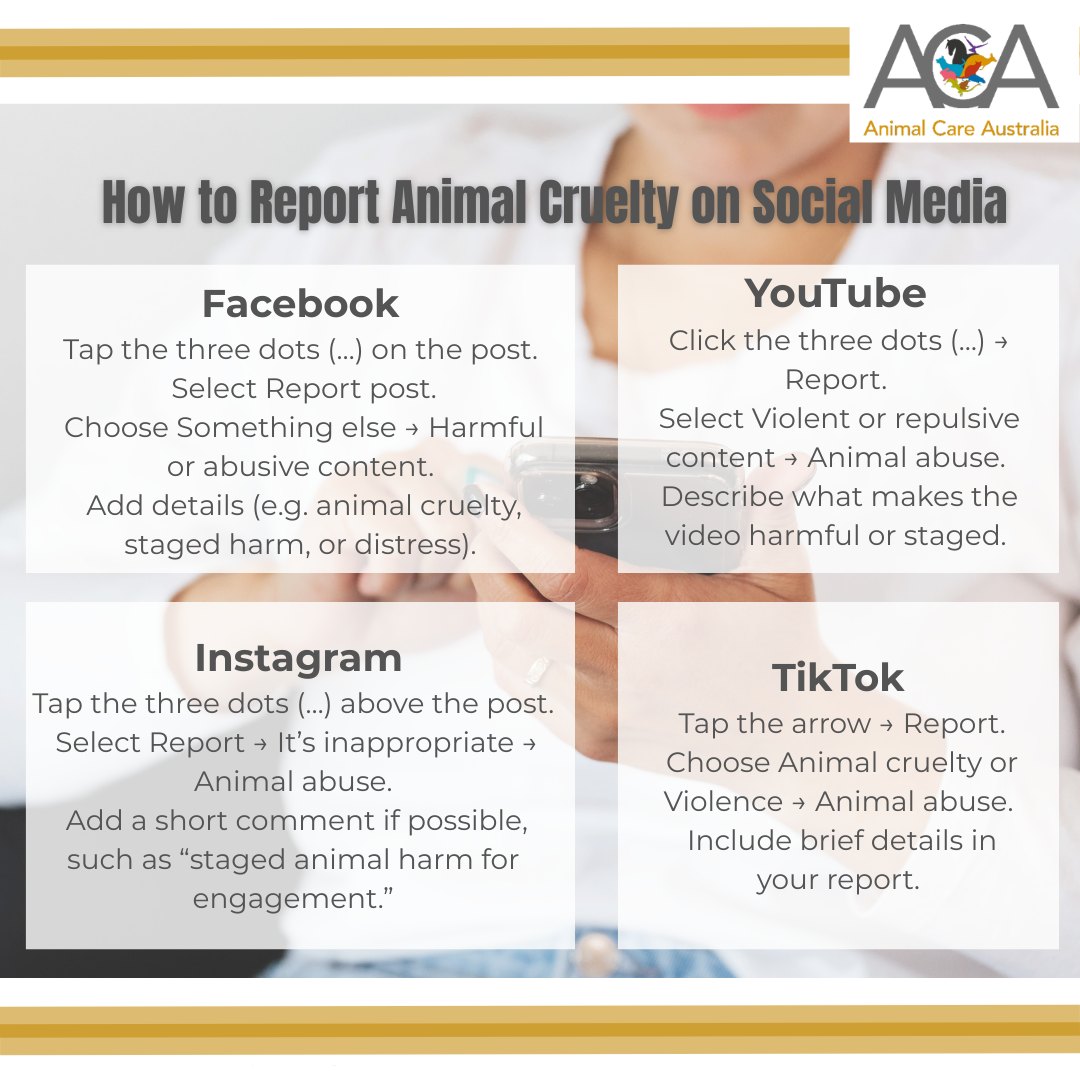
- Reporting the video as animal cruelty is also good, especially if you’ve already clicked on it – when the video receives enough complaints the social media platform will take the video down, and if the same accounts are reported often, their profile or channel will be closed or banned.
- If you see a video made in Australia (you may recognise the background or see road signs or uniquely Australian features), report the video to police in your state. Police have access to social media companies that other agencies do not. Take a screenshot or screen record the video, if you can, to help identify the video and creator after the social media platform removes it. There is a small chance of prosecution, if the creator is causing the animal harm. Again, the more complaints police receive the more likely action will be taken.
- Holding social media companies accountable for allowing this content to be published long enough to have millions of views is another step we can take. If the content was not profitable, people wouldn’t create it and put animals in harms way to do so. Mention this when you are asked to do surveys or comment on your social media experience. Complain to the Social media platform (they are notorious for having no contact information themselves, so use what opportunities you can!) and respond to government inquiries, questionnaires or surveys about social media and when it causes harm.
To report animal cruelty posts check out the information in our social media post


