

Australians love to hit the road with our pets for holidays, and Animal Care Australia encourages all pet owners to plan ahead for safe, humane travel.
Proper preparation helps prevent stress and harm.
Let’s make sure your holiday is a safe one for all animals travelling with their families.
Road Travel
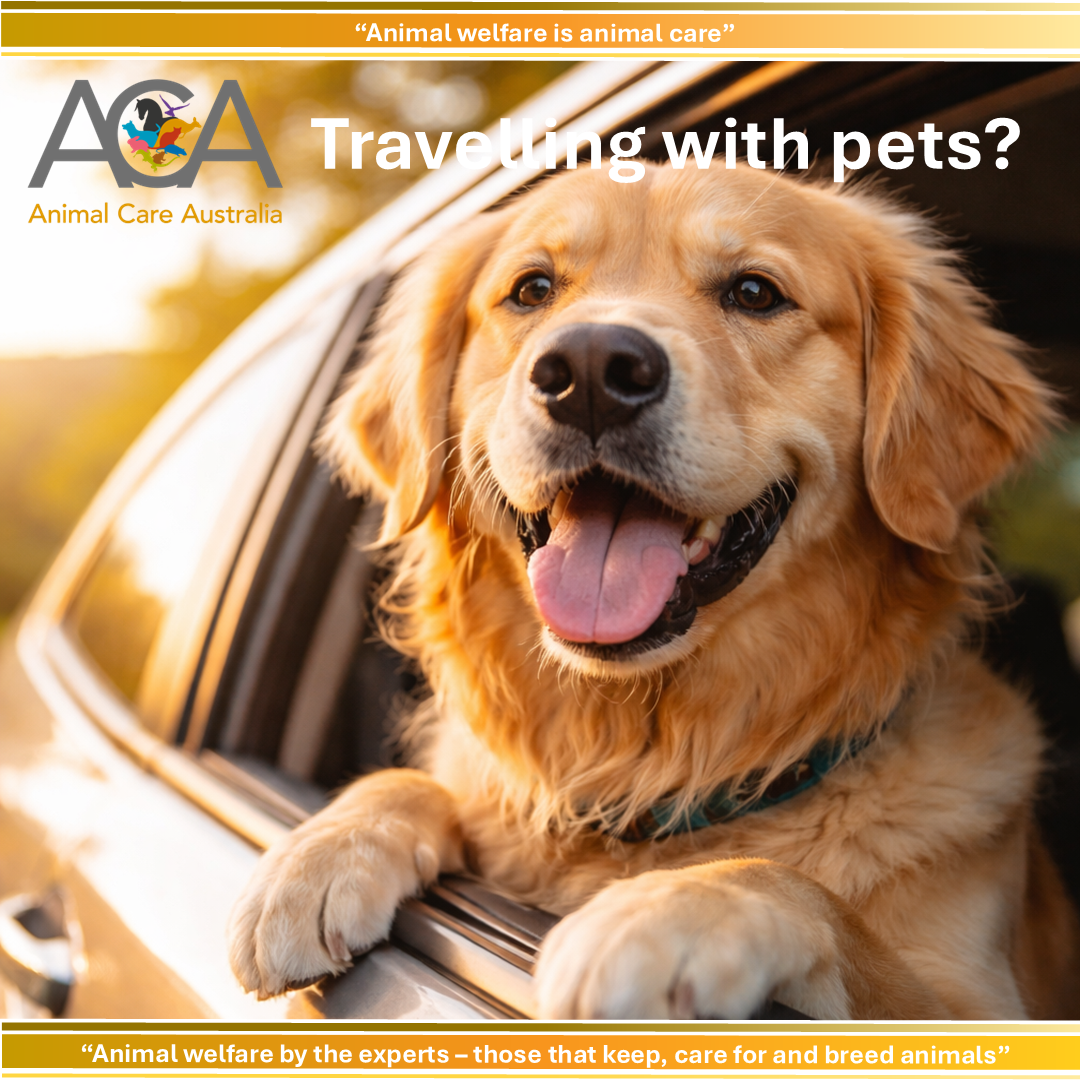
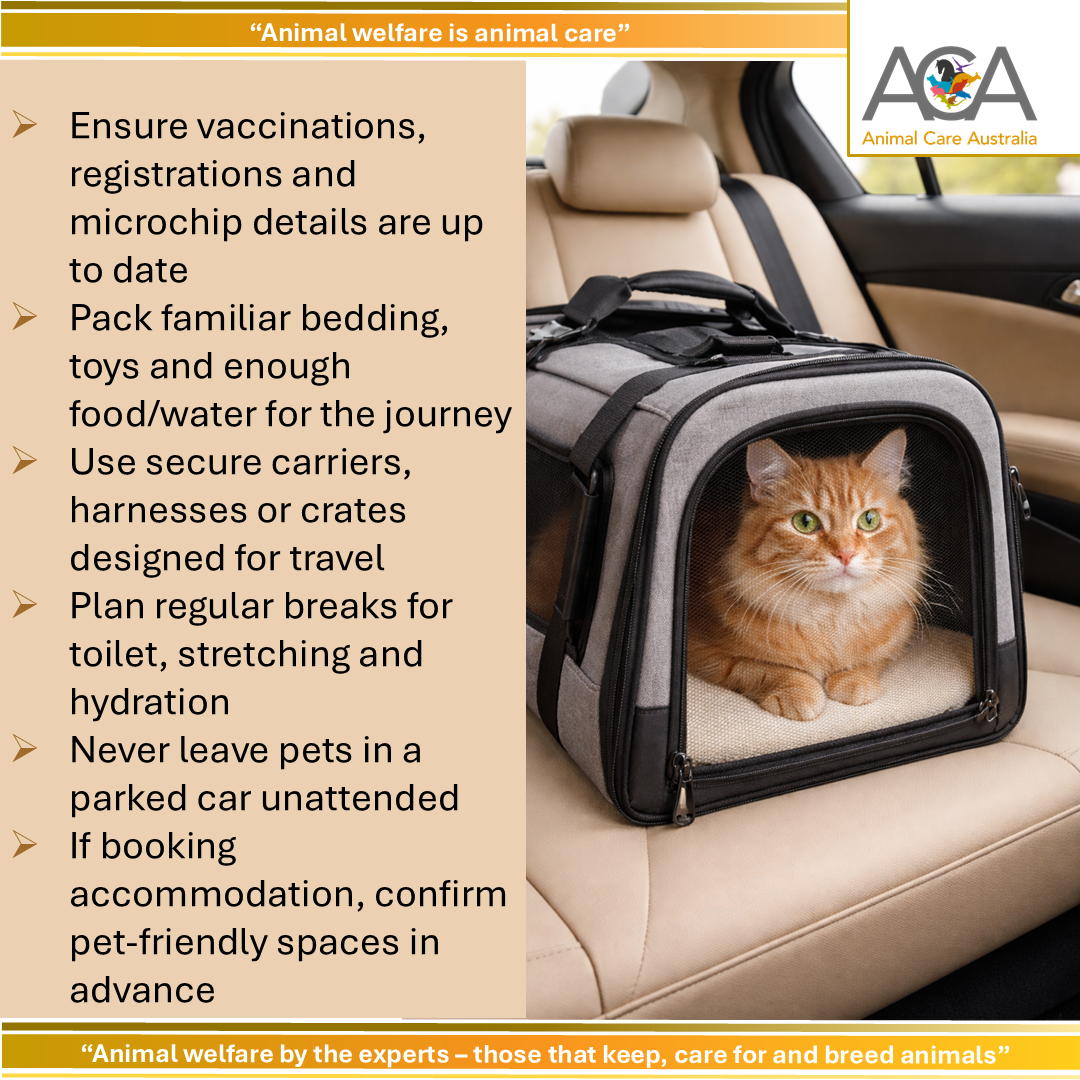
Here’s a quick check list to ensure your pets are ready and able to travel with you:
- Ensure vaccinations, registrations and microchip details are up to date
- Pack familiar bedding, toys and enough food/water for the journey
- Use secure carriers, harnesses or crates designed for travel
- Plan regular breaks for toilet, stretching and hydration
- Never leave pets in a parked car unattended
- If booking accommodation, confirm pet-friendly spaces in advance
Flying in cabin with your pets
Information provided by Dr Tanya Phillips – ACA Veterinary Representative – Best Fur Forward blog
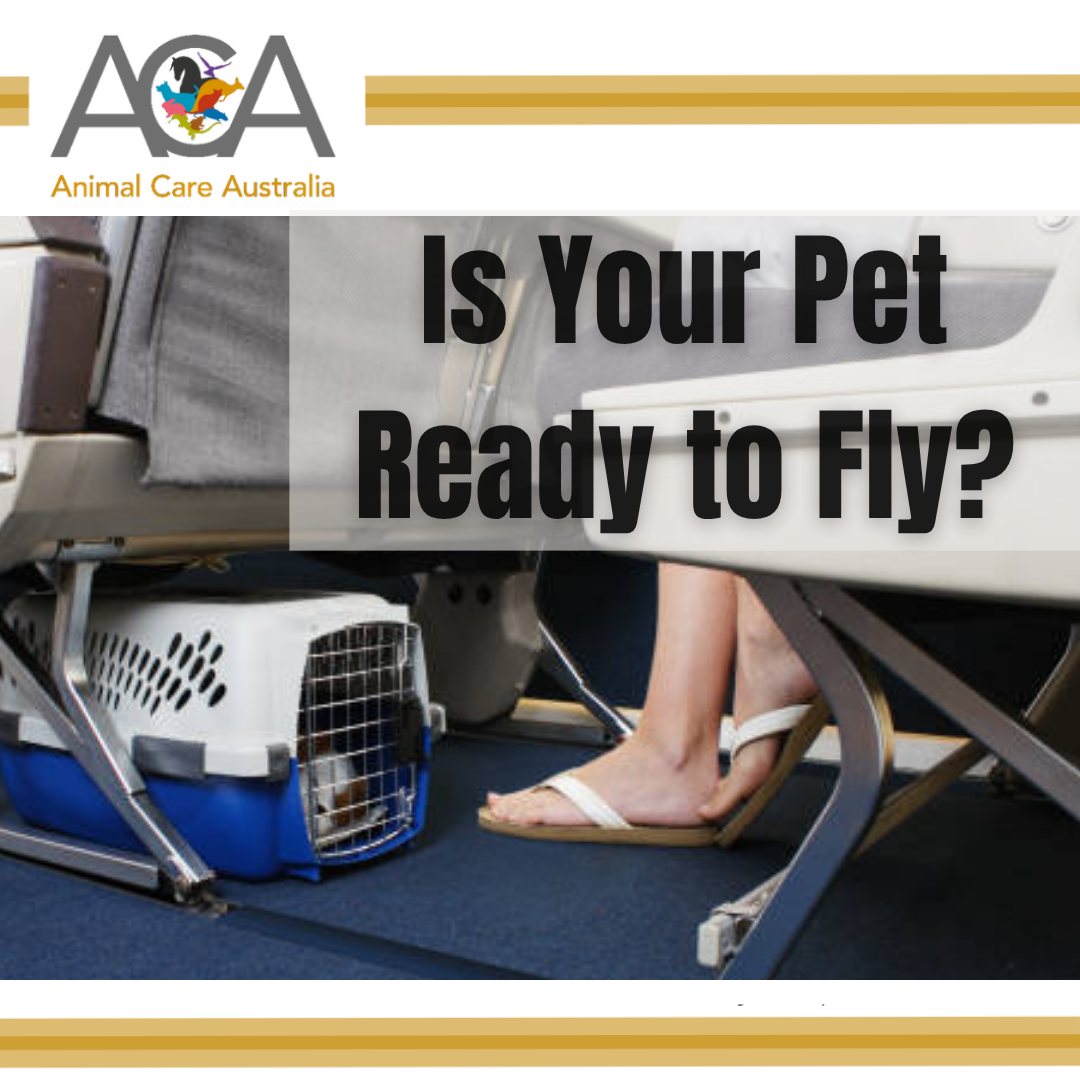
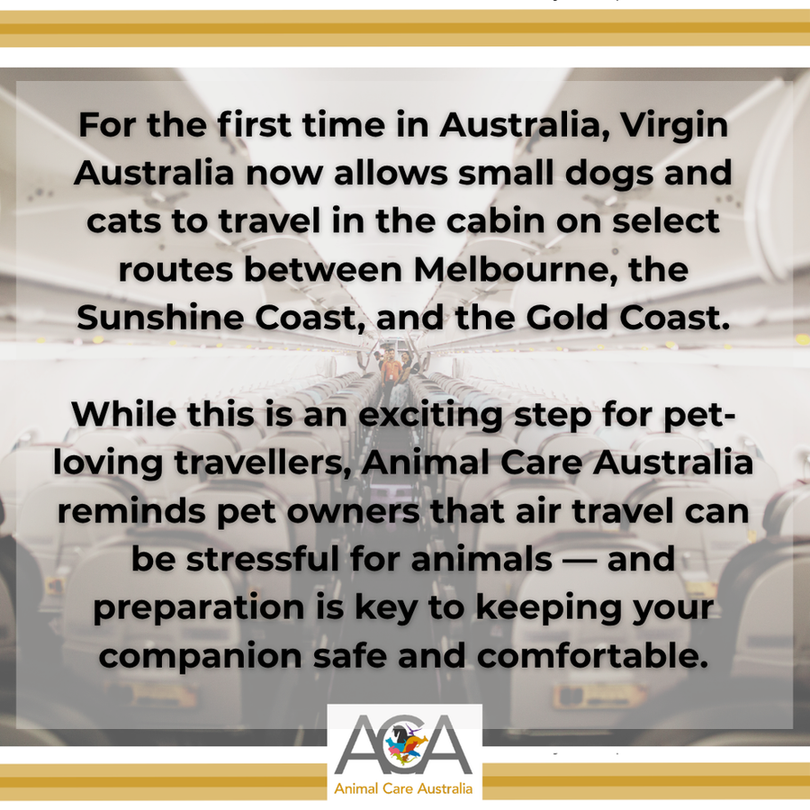
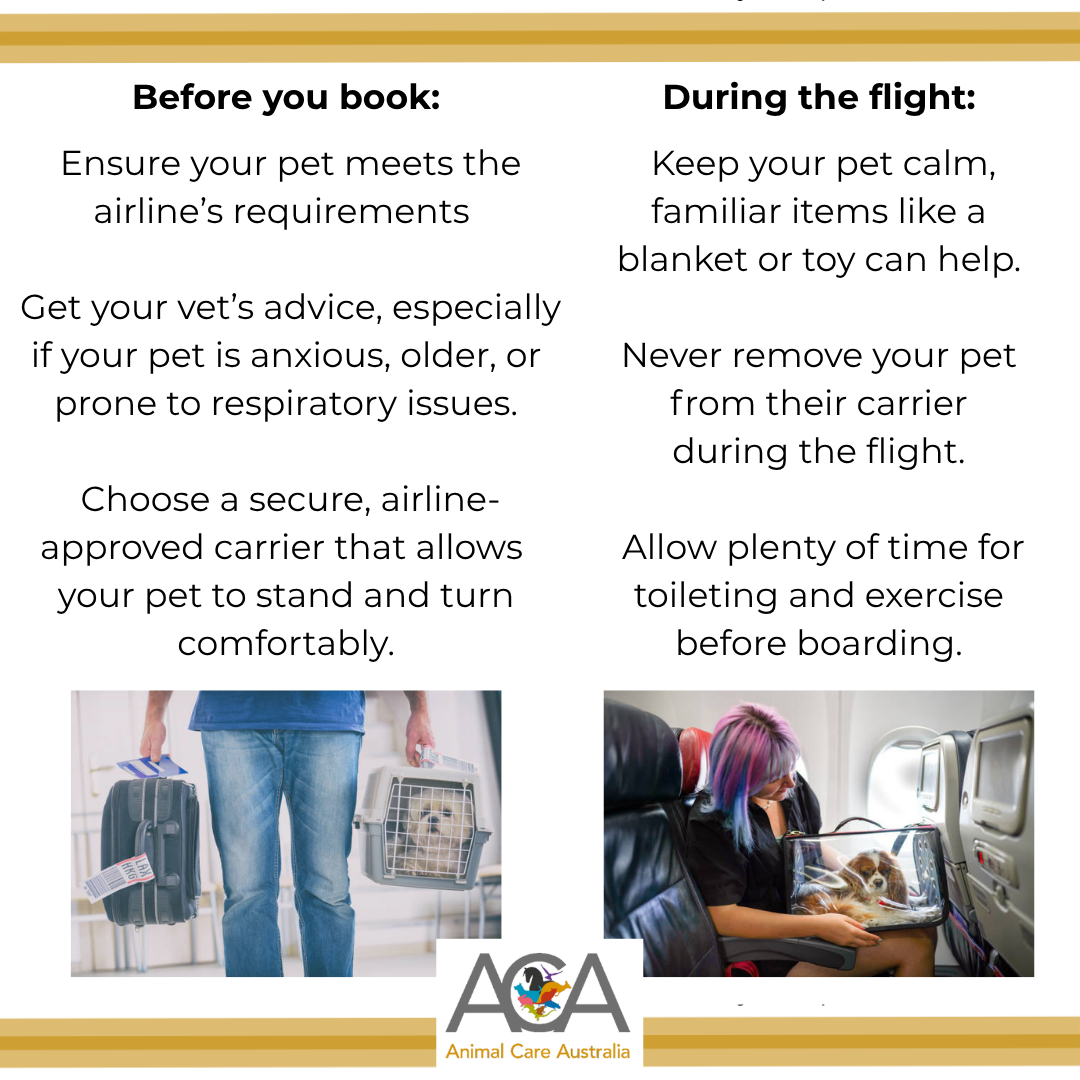
As a Vet, my biggest advice when preparing your dog (or cat) to fly in-cabin is to prioritise comfort and calm over convenience. Air travel can be stressful for pets, so thoughtful preparation makes all the difference.
✈️ Launch & Trial Routes
Launch Date: 16 October 2025
Booking Available From: 17 September 2025
Trial Ends: 30 June 2026 (extended from January)
Eligible Routes:
– Melbourne ↔ Sunshine Coast – Dogs and Cats permitted
– Melbourne ↔ Gold Coast – Dogs only (no cats permitted)
– Operated only on Virgin Australia flights (domestic routes). Partner airlines excluded.
💺 Seating & Booking Requirements
Pets in Cabin must be booked through Virgin’s Guest Contact Centre (13 67 89).
Each pet travels with one accompanying adult owner (seated in window seat only).
Pets must remain in their approved carrier under the seat in front for the entire flight.
Only one pet carrier per guest is allowed in the cabin.
📏 Carrier Rules (Strict Dimensions & Weight)
Maximum Combined Weight (pet + carrier): 8 kg
Maximum Carrier Dimensions: 44 cm (L) × 26 cm (W) × 28 cm (H)
Carrier must fit completely under the seat in front.
Type: Soft-sided, escape-proof, well-ventilated (vent panels on ≥ 3 sides), leak-proof base with absorbent liner.
Choosing and Preparing the Carrier
Virgin Australia has very strict limitations on carrier size. It must fit completely under the seat in front of you. Pet must be able to stand, turn around, and lie down comfortably inside without touching the top of the carrier.
If your pet can’t do this without being cramped, flying in-cabin may not be suitable.
• Measure first: Measure your pet from the ground to the top of their head and compare to the airline’s carrier dimensions.
• Ventilation & visibility: Choose a carrier with mesh or vent panels on at least three sides for airflow.
• Feeling safe: Select a design with optional flaps or covers to close off mesh if they become frightened.
• Comfort items: Line the base with an absorbent puppy pad and a familiar-smelling blanket.
Training & Familiarisation
Start carrier training at least 3–4 weeks before your flight. Keep the carrier open at home, feed your pet treats inside, and make it a safe, positive space. Gradually increase the time they spend resting in it while you’re nearby.
Food, Water & Toileting
Feed only a light meal (about 1/4 of their usual) 2–4 hours before take-off. Offer small amounts of water but avoid over-filling their bladder before the flight. Take a short walk or toileting break just before entering the terminal. Avoid feeding or watering during the flight to prevent regurgitation and aspiration.
Health Considerations
Skip the flight if your pet is unwell or “not quite right” that morning. Avoid flying if your pet has respiratory symptoms, heart or airway disease, asthma, or chronic respiratory conditions. Be especially cautious with brachycephalic breeds (pugs, French bulldogs, Persians, etc.) and senior pets who may struggle to stay comfortable.
✈️ Vet’s Note: Age & Vaccination Clarification
While Virgin Australia allows pets as young as 8 weeks to travel in-cabin, this is only the minimum policy threshold. At 8 weeks, puppies and kittens have usually only received their first vaccination. Most aren’t considered fully covered until around 14–16 weeks after completing their vaccination course. Waiting until this stage ensures your pet is better protected, more confident, and physically mature enough to handle the travel experience safely.
Sedation
Never give sedatives before flying. Airlines prohibit sedated animals because sedation can mask distress or breathing problems. Instead, focus on positive training, familiar scents, and calm energy from you.
Final Thought
Flying with your pet can be perfectly safe when carefully planned. The goal is to make the journey as calm, comfortable, and predictable as possible for both of you.
Pets can’t travel with you?
Going away for a few days and cannot take your pets with you?
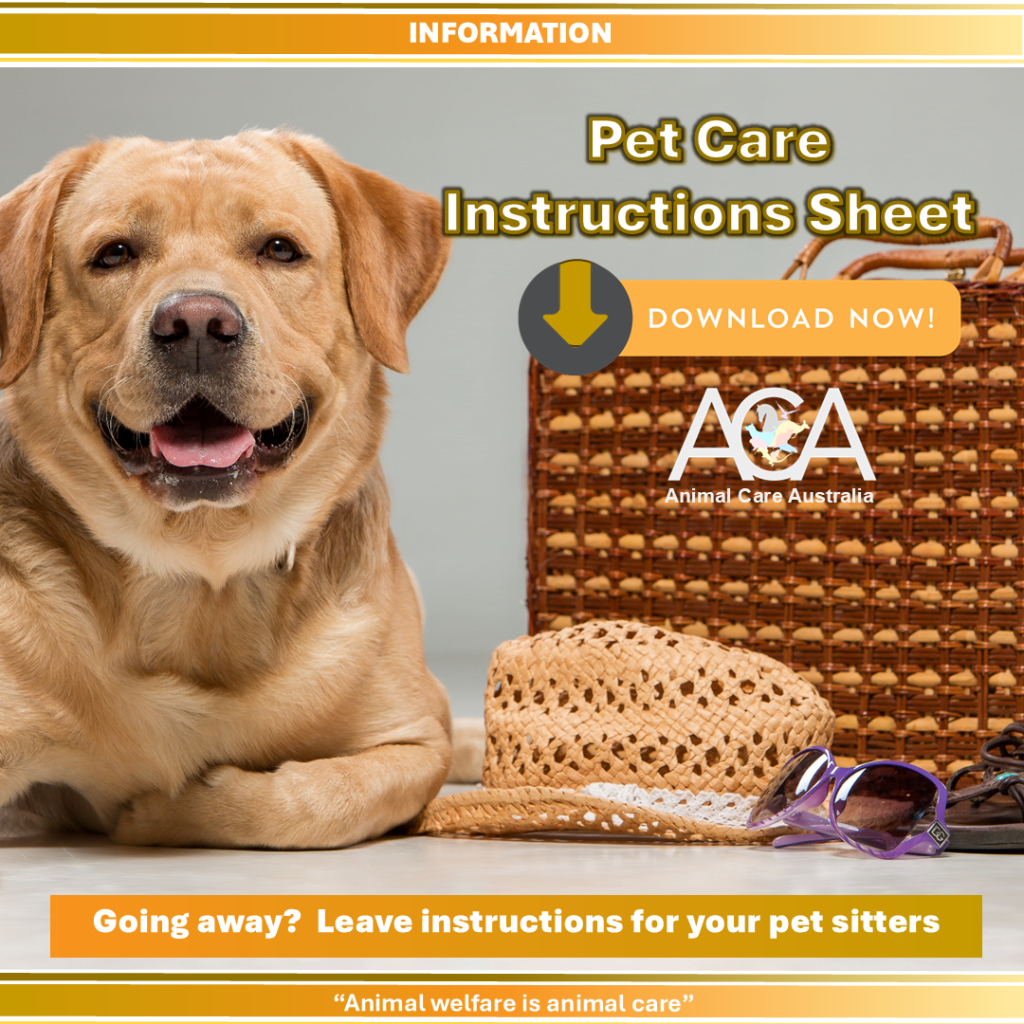
You need a pet care instruction sheet to provide clear, detailed guidance to a pet sitter, friend, or family member, ensuring your pet’s well-being and your peace of mind while you are away. This sheet will cover essential information such as your contact details, your pet’s feeding and exercise routines, medical information, and emergency contacts like your veterinarian, creating a comprehensive care plan that maintains consistency for your pet.
Download your care instruction sheet now:
https://www.animalcareaustralia.org.au/wp-content/uploads/2025/12/Pet-Care-Instructions.pdf


