
Aggression with humans
PLAY AGGRESSION
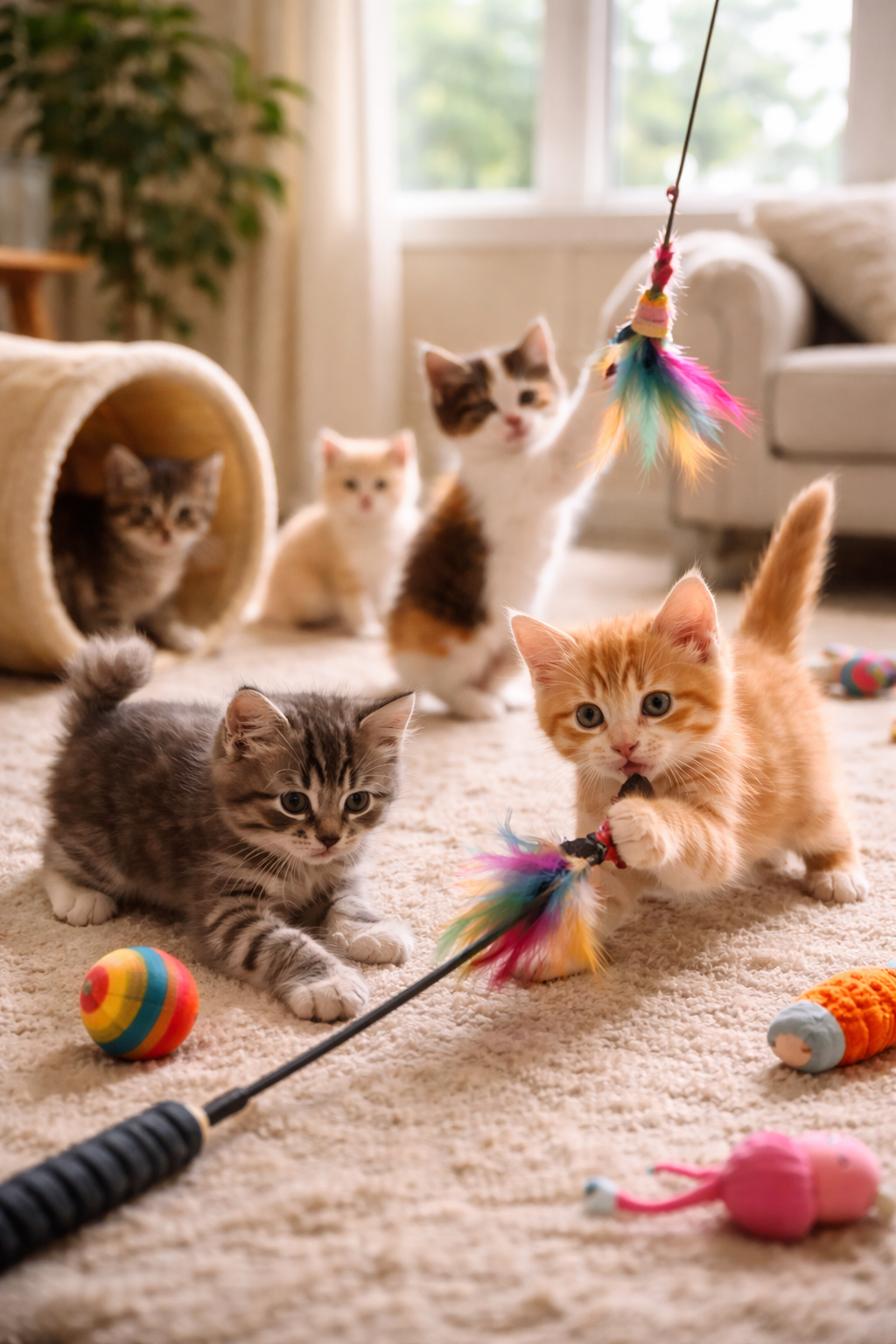
To a cat, play is all about prey. Body postures of play aggression are the behaviours a cat shows when searching for and catching prey. She stalks her target from behind a door or under a chair. She crouches, twitches her tail, flicks her ears back and forth, then pounces, wrapping her front feet around the prey, chewing it and kicking it with her back feet.
We enjoy watching these cat antics, but kittens don’t know when to stop. Their rough play can result in scratches and little bites that don’t break the skin. You must teach your cat when enough is enough; otherwise, as she gets older, the scratches may get deeper and the bites harder.
Solution:
- Use a fishing pole type of toy to keep her away from your body when playing with her.
- If she starts chewing or scratching any part of your body, immediately say “uh-uh,” and redirect her to a toy. If she continues to chew or scratch after you say, “uh-uh,” stop playing immediately. Never hit her or yell, or she’ll become afraid of you.
- Don’t resume playing until she has calmed down; then use the toy.
- Some cats are easily overstimulated, and their play can escalate into true aggression. Pay close attention to your cat’s body language; if she’s getting too intense, stop playing immediately and give her time to cool off.
PETTING AGGRESSION
Sometimes when you’re petting your purring cat, she might bite you out of the blue. Cats vary in how much they’ll tolerate letting you pet or hold them. There are usually warning signs that they’re reaching their limit, but their signals can be subtle and hard to detect.
Look for:
- Restlessness
- Tail twitching
- Ears turning back or flicking back and forth
- Turning or moving her head toward your hand
- A sharp meow, low growl, or a hiss
- She may even put her teeth on you lightly to tell you to stop.
immediately and let her sit on your lap, or go her own way. Never yell or hit; any kind of physical punishment almost always makes the problem worse, as it makes the cat more likely to bite. She might fear you and/or associate petting with punishment.
Solution:
- If you have a cat who doesn’t like being petted, you could try to win her over with food rewards.
- Before your cat shows any of the behaviours described above, offer her a special titbit of food. Pet her lightly for a short time while offering her treats. She’ll come to associate being stroked with more pleasant things.
- Stop petting before you see the signs of irritation. If you keep petting until the cat reacts badly, you’ve defeated the purpose. Each time you work with your cat, try to pet him for slightly longer periods using the food.
REDIRECTED AGGRESSION
Redirected aggression occurs when a cat is aroused (in a bad way) by an animal or person, but has no outlet for her naturally aggressive feelings. The cat gazing out the window may have seen another cat outside, which makes her want to defend her territory. When she can’t get to that cat, she attacks the first thing that crosses her path. She’s so worked up about that strange cat that she’s not aware that she has redirected her aggression to you.
Solution:
- Observe your cat closely before approaching her. Does she:
- Stare so hard out the window that she doesn’t know you’re there?
- Not respond when you call her?
- Jerk her tail back and forth?
- Growl, hiss, or meow loudly?
Don’t mess with her! Clap your hands loudly to break her fixation, or just walk away and let her calm down by herself. You may also be attacked if you try to interfere with two cats fighting. Don’t get in the middle of it. Use a squirt bottle or pillow to break up the fight and distract the cats.
TERRITORIAL AGGRESSION
Cats are by nature very territorial. Usually, cats only feel the need to defend their territory from other cats. Occasionally a cat may become dominant with their owner. It is important to give “time outs” and redirect their attention with loud noises (clapping or banging a saucepan with a spoon) or squirt with a water bottle. Cats that are aggressive to humans due to dominance are dangerous and often need medication in combination with behavioural modification to treat.
OTHER EXPLANATIONS
If your cat’s behaviour has started suddenly, there could be a medical issue causing it. Take her to the vet for a check-up; if she gets a clean bill of health, she needs behaviour modification.
If her behaviour improves when she’s confined to one room, her aggression may be due to stress in her environment (loud kids, other cats or pets).
Animal behaviour is a fascinating and sometimes complex subject. If you have questions about your pets behaviour, contact your veterinarian.
By: Michelle Grayson – Animal Care Australia Cat Representative – Originally published: September 2022 ACE Newsletter.


