
ACA’s Recommendations to the Inquiry:
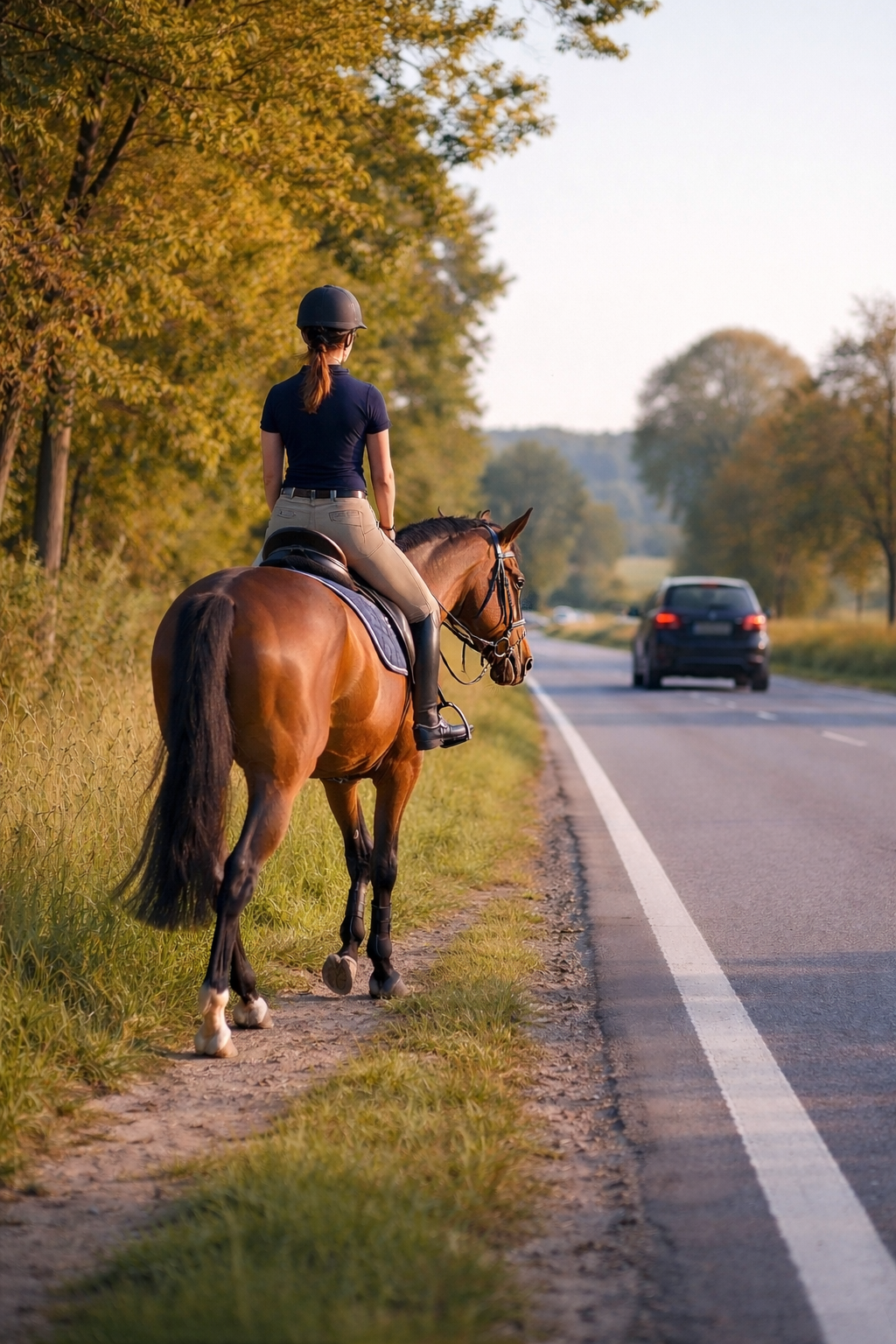
- The Victorian Government recognise equestrians as vulnerable road users, who are at high risk of injury and death on Victorian roads.
- Recommendations include helmets, Hi Viz and reflective attire is worn by all equestrians when on Victoria’s roads.
- Amendments are made to ‘Road Safety Rules 2017’ under ‘Part 22—Additional Victorian Road Rules’ and ‘The Victorian Driver’s Handbook’ under ‘Sharing the Road with Animals: Horses’ to include:
a. Allow at least one car width on 60 km/h roads and more at higher speeds when passing horses
b. Slow down to 40 km/h or less to pass safely, and
c. Stop immediately if indicated to do so by the rider or driver - Victorian Government update horse rider road signage to include instruction on what motorists should do — such as “Pass wide and slow.”
- Victorian Government provide funding for motorist education campaigns, including professional driver training and local community-led education programs.
As ACA’s Horse & Livestock Rep, I was dismayed to see that horse riders, drivers and handlers were not mentioned within the Terms of Reference for this Inquiry. Not only are equestrians not recognised and identified as vulnerable road users, but the industry does not appear to have been consulted.
With assistance from member association Bitless Inc, we quickly established an informal survey to gather opinions from Victorian equestrians. We notified equestrian organisations in Victoria that regularly use roads in their activities (trail riding and carriage driving groups etc) and shared our survey on social media.
We received 37 responses in time to be included in ACA’s submission (and a few more afterwards that will help if ACA or Bitless Inc are invited to participate in any inquiry hearings). Our survey results were consistent with a national survey published in 2015, and it was somewhat disheartening to see that the situation on our roads has not improved with time.
Some notable statistics from our survey:
Of the 37 responses: 33 ride, 11 drive carriages and 22 lead horses on the roads.
⇒ 75% of the respondents take horses on the roads at least once a week.
⇒ 92% wear helmets, and
⇒ 60% wear hi-viz when on Victorian roads.
Respondents were asked whether driver behaviour towards horse riders on the road changed during lockdown. One third said yes, one quarter said no, and one third said they did not take their horses on roads during the lockdowns. When asked if they noticed a change in other road users’ behaviour after lockdowns, 41% said no, and 35% said yes. The rest were not sure, or were not riding through both periods of time to compare.
However, when asked if they feel safer riding and driving on the roads compared to 3 years ago:
⇒ 66% said no — they feel less safe or much less safe, and
⇒ 32% felt the same.
⇒ None said they felt safer than 3 years ago. This seems to imply that motorists’ behaviour has generally declined over time.
Our Survey Respondents told us that in the last 3 years:
⇒ 46% personally experienced or witnessed a road incident with horses
⇒ 16% experienced verbal abuse from motorists for being on a road
⇒ 38% had drivers deliberately pass too close to their horse
⇒ 49% experienced incidents with speeding motorists
⇒ 25% had drivers ignore their instructions to slow or stop
⇒ 70% said that their safety would be improved with driver education
⇒ 65% said that they feel less safe on the roads than 3 years ago.
We hope that this Victorian Inquiry will raise awareness and offer practical and cost-effective solutions to the issues equestrians are facing on the roads. This could then lead to changes that can be adopted nationally.
We will keep you updated on the outcome.
By: Karri Nadazdy – Animal Care Australia Horse & Livestock Representative. Originally published: June 2023 ACE Newsletter.


