
Fleas are one of the most common parasites affecting cats, and even indoor cats can become infected. These tiny insects may be small, but they can cause major discomfort, skin problems, allergic reactions, anaemia in kittens, and even spread tapeworms.
Understanding how fleas live, spread, and survive is the key to protecting your cat and your home.
What Are Fleas?
The most common flea found on cats is the cat flea (Ctenocephalides felis). Adult fleas survive by feeding on blood and can jump incredible distances, allowing them to move easily between animals and environments.
A single flea infestation can quickly grow out of control because fleas reproduce extremely fast.
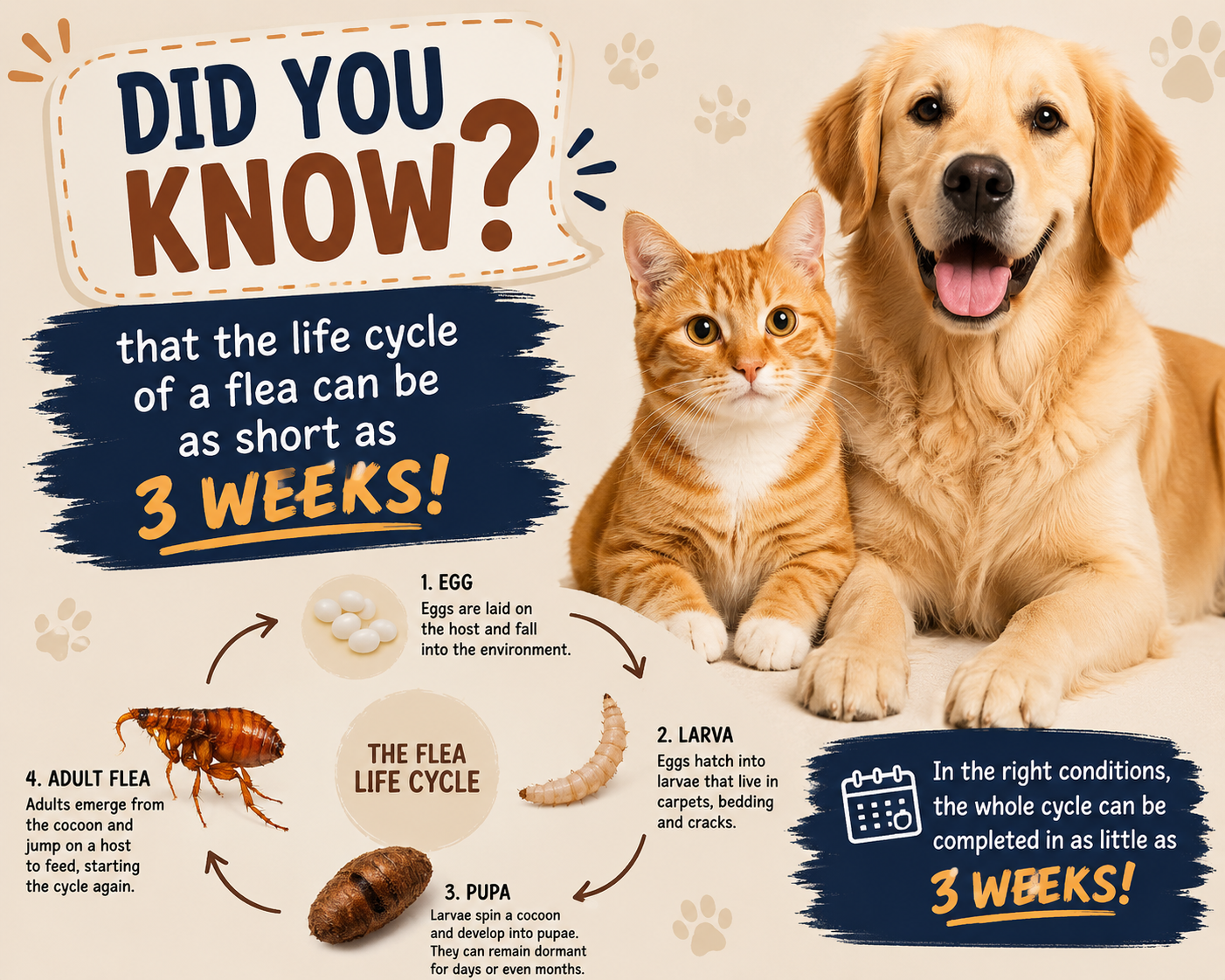
The Flea Life Cycle
Fleas go through four life stages:
1. Egg
Adult fleas lay eggs on the cat after feeding. A female flea can lay dozens of eggs every day. These eggs fall off the cat into carpets, bedding, lounges, cracks in flooring, and other areas around the home.
2. Larva
The eggs hatch into tiny larvae that avoid sunlight and hide deep in carpets, furniture, and bedding. They feed on organic debris and flea dirt left behind by adult fleas.
3. Pupa
Larvae spin cocoons and become pupae. This stage is extremely hardy and can survive for weeks or even months while waiting for the right conditions to emerge.
4. Adult Flea
Adult fleas emerge from the cocoon when they detect warmth, vibrations, or movement nearby. They immediately look for a host animal to feed on and restart the cycle.
Under ideal conditions, the entire flea life cycle can be completed in as little as 2–3 weeks.
Signs Your Cat May Have Fleas
Common signs include:
• Excessive scratching or grooming
• Tiny black specks in the coat (“flea dirt”)
• Hair loss or scabs
• Red or irritated skin
• Restlessness or discomfort
• Visible fleas moving through the fur
• Pale gums or weakness in kittens (possible anaemia)
Some cats develop flea allergy dermatitis, where even a single flea bite can trigger intense itching and skin inflammation.
How Cats Catch Fleas
Fleas are extremely common in cats and dogs, even in very clean homes or well-cared-for pets. They can be picked up from:
• other animals
• outdoor environments (parks, gardens, strays)
• even shared spaces like boarding or grooming facilities
• tracked inside on our shoes or clothing
So having fleas doesn’t mean you are a bad pet owner. It just means exposure happened & you need to treat the problem now that it exists.
Why Treating the House Matters
Only a small percentage of fleas live on your cat. Most of the infestation exists
in the environment as eggs, larvae, and pupae.
That means successful flea control requires treating:
• Your cat
• Other pets in the household
• Bedding and blankets
• Carpets and rugs
• Furniture and hidden corners
Vacuuming regularly and washing bedding in hot water can help reduce flea numbers.
Flea Prevention
Modern flea preventatives are the safest and most effective way to protect cats. Options include:
• Spot-on treatments
• Oral medications
• Flea collars prescribed for cats
• Combination parasite preventatives
Always use products specifically designed for cats. Some dog flea products contain permethrin, which is highly toxic to cats.
When to See a Vet
Veterinary advice is important if your cat:
• Has severe itching or skin wounds
• Is losing weight or acting lethargic
• Has pale gums
• Is a kitten with fleas
• Continues getting fleas despite treatment
Early treatment can prevent serious complications and keep your cat comfortable and healthy.
By: Michelle Grayson – Animal Care Australia Cat Representative. Published: September 2026 ACE Newsletter


