
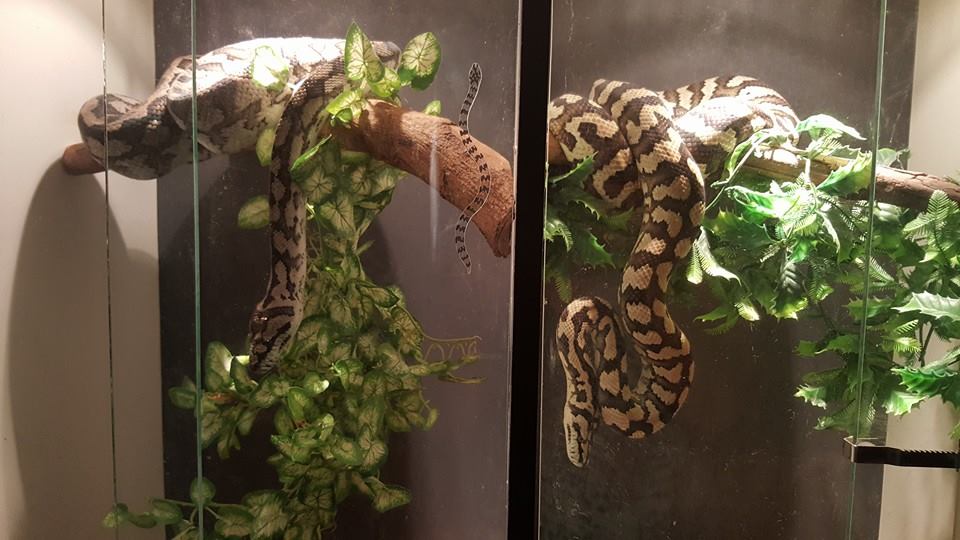
With Autumn comes the cooler nights, followed by the cooler, shorter days. It is a time of year that can bring dread and fear into every keeper’s life. So many questions that need answering. Do I have to brumate my reptile? Is it safe to brumate my reptile? Are they old enough? And the all-important question, how do I brumate my reptile?
I will try to cover a few scenarios here.
Do you have to brumate your reptile? Well, that is completely up to you. Many keepers have kept both snakes and lizards “awake” during winter with no ill effects to their pet. What is important is to recognise that you will have to adjust your enclosures to ensure that they are kept at the correct temperature as the surrounding environment will contribute to lower temperatures in your enclosures.
This is a good time of the year to also change your UVB globes to ensure that your reptile is receiving the correct UVB levels as globes deteriorate over time.
The recommended time to change globes is around the 6-to-9-month mark. As the days get cooler, check your basking spot temperatures and adjust as needed to maintain correct temps. You may find you will need to up your wattage on globes. You can also cover the top of mesh tanks to promote heat retention. Even with maintaining hotspot temperatures, you may still find that your reptile will slow down and may go into brumation. This should generally be avoided for the first year of life or if the animal has not maintained a good weight through the summer feeding months.
Now we will get onto what to do if you do want to allow your animal to brumate. Brumation should only be attempted with animals that are of a healthy age and weight, any illness or weakness and this should be avoided. You will find animals will generally up their feeding at this time of year. As breeding occurs after brumation in wild animals, they need to bulk up for the slow feed time ahead and have good condition for the breeding season to come. As a rule of thumb, animals start slowing down in April if the weather conditions are close to normal and the nights are getting cooler faster. Once you notice this, slow down feed as they start to lose interest. After a couple of weeks, stop feeding altogether. This gives the animal time at the optimum temperature to digest any feed in the stomach and evacuate their bowels. After this has been achieved, you can regulate the temperatures down and turn the day light hours back. Depending on which area of Australia you live, will determine the hours of light and the temperatures that the animals can be kept at. This will also depend on the breed that you keep. Once in brumation, do not disturb the animal unless necessary. Do not offer food. Brumation is not like hibernation, on warm days, you may see your pet wake up and venture out, but it is important that you do not offer food even if they are up and about. Generally, brumation will last until the days start getting longer and warmer, in my experience, this will be around September.
Done correctly, brumation can be good for both owner and pet and can be necessary for successful breeding ventures. If your animal is showing any sign of distress or illness during brumation, always consult a vet. Reptile societies are a great source for information and there are several books written about how to successfully navigate brumation and if it is right for you and your pet. Always ask if in doubt, no question is a dumb question.
By: Joanne Payne – Animal Care Australia Reptile Representative – Originally published: March 2021 ACE Newsletter.


