
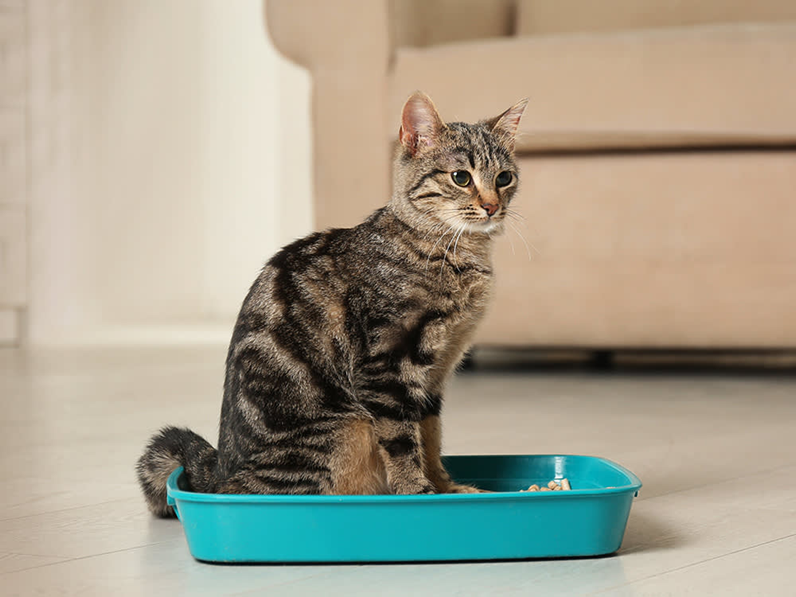
Cats don’t stop using their litter tray because they are trying to “get back” at you, and they aren’t holding a grudge because you accidently stepped on their foot or were late with their breakfast or dinner.
If your cat has been a resident of the home for a while, a vet checkup is the best first step. Once you rule out health issues, put on your Sherlock Holmes hat and consider what has changed in the house recently. Even little things like furniture changes or their owner leaving the house spontaneously a lot lately can stress a cat and lead to territorial, marking-type behaviours.
· Stress can be caused by several things, including a new pet or baby in the home, a move to a new home, or changes in the litter box itself (such as a new type of litter).
· Dislike of the litter or litter box. If a cat dislikes the litter or litter box, it may avoid using it altogether.
· Changes in the home, such as a new baby or pet, can cause a cat to feel stressed and act out by missing the litter box.
It is important that you seek advice from your Vet if you notice any abnormal changes (such as more frequent urination, straining to go to the toilet, change in texture of their stools). It may turn out to be nothing serious, but it is better to get it checked to make sure your cat is happy & healthy.
The good news is that there are some easy remedies for some of the more common reasons.
1. The litter box could be small:
The conventional thumb rule is to ensure that your kitten’s litter box is at least one-and-a-half times its body length. If your cat is toileting outside the litter box, your cat may be uncomfortable when sitting in the litter box especially if they have gone through a growth spurt or gained some weight. Similarly, there’s a chance that the kitty’s litter box is shallow or inadequately filled to satisfy digging to bury the evidence.
2. The litter box location is difficult to access:
Most of the seniors and aged cats will poop outside the litter box because of its location. If your senior cat is pooping outside the litter box, she may be suffering from arthritis and joint pains. Be sure to provide your older cats with litter boxes that they can access with ease. Kittens may be struggling with accessing the litter box in some rooms. Consider moving the litter box if it’s located in a high-traffic area, near the door, or in a location with a lot of noise.
3. The cat box is smelly and unhygienic:
Is the litter box clean? If not, this is a problem, and your cat won’t go to the toilet in the litter box anymore. Cats are clean animals and they like their litter boxes kept clean. Your cat may turn up their nose if the conditions, particularly the smell, don’t meet their hygiene standards.
4. Territorial Dominance:
Do you have a multi-cat household?
Even amongst bonded cats, tension can occur when it comes to sharing an important resource such as the litter box. When a cat feels as if he can’t use the box without being threatened or ambushed, they will find alternative places to do their business. You can be sure that the place (or places!) that they deem safer (under the dining room table, in your left running sneaker, etc.) won’t be desirable to you.
Enclosed litter trays in multi-cat homes can fuel the tension between cats, as they limit a cat’s awareness of lurkers and only provide one route for escape if threatened. Where in nature do cats search out hollowed out logs to go to the toilet in? Hint: They don’t. An uncovered litter box will allow your cat to determine and act upon the safest way to escape and will subsequently make him feel safer while using the box. If you prefer a covered box as a way to avoid litter being kicked around the room, consider a box with taller sides (assuming your cat is able enough to easily step over).
Increasing and dispersing litter boxes throughout the home can actually decrease territorial thinking between your cats and help them get along better.
5. Insufficient Litter Trays & Poor Location:
Are your cats outnumbering the litter boxes? This can trigger your many cats to look for alternative places to relieve themselves. The rule of thumb is one litter box for each kitty plus one extra box. The litter boxes need to be placed in areas that are easily accessible with at least one per floor if your house is multilayered.
It is also important to place your toilet trays in appropriate locations. Instead of placing them all in one room, spread them throughout your home in easily accessible and well-lit areas. Spreading them throughout your home will give your cat more options if another cat is standing guard over a litter box. Finally, make sure that the boxes are placed in a way that allows your cat the ability to see as much of the room as possible (including the door), so he can anticipate threat.
What is the best way to remove the smell of urine?
An enzymatic cleaner will help to break down the uric acid and will not encourage marking the area again the way that the ammonia would.
Using a citrus spray may keep your cat away from the area, but do your research and make sure it is nontoxic for you and your cat. Cats dislike the smell of citrus.
Should I discipline my cat for toileting inappropriately?
Some cat owners have been known to use a water spray, or simply make their displeasure known the way another cat would – with a loud hiss. Unless you can catch them in the act, they won’t even know why you are angry. Cats most often urinate in the house when they are new to it, stressed, or ill.
Cats touch you and other cats lightly with their nose as a friendly type of communication, and if you touch their nose lightly then it’s generally well-received. Rubbing their nose in an area they have urinated in, however, is NOT recommended and will only make your cat think that you are being cruel.
By: Michelle Grayson – Animal Care Australia Cat Representative. Originally published: September 2023 ACE Newsletter.


