
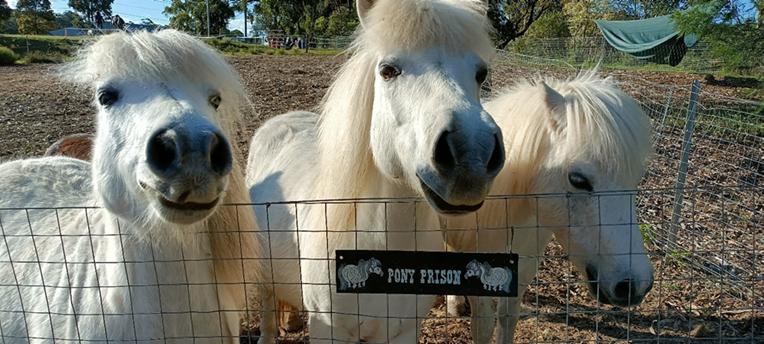
I’m often asked whether minis can be kept as pets and ‘lawnmowers’ in suburbia, or to have one instead of a dog or cat.
Mini horses and mini ponies can make excellent pets, but its important to keep in mind that minis are just small versions of full size equines, having been selectively breed for size. They have the same care and welfare needs that all horses do.
The first consideration is how many. What the? I hear you say? You just want one? Well, all horses, including minis, are herd animals with a basic and uncompromising need to live with other equine company. Minis cannot be kept alone without an equine friend that they can interact with. Horses take turns sleeping to watch over each other, they groom each other, and stand nose to tail to swish flies off each other. They tend to go as a group to the water trough, or to rest in the shade. Lonely horses will show signs of sleep deprivation, distress and anxiety. This can turn into serious behavioural issues such as aggression, pacing, kicking and constant neighing. Anyone considering a horse (of any size) must allow for their horse to have company. One horse is never an option.
Now that you know how many – the next consideration is space. Horses have evolved to walk and eat (called grazing) for around 16 hours a day. They have very small stomachs that need to be trickle fed with lots of fibre all day long. They need space to move and to have enough land to have grass most of the year. Not all grass is safe for horses to eat! Suburban lawns are fertilized, weed treated, and often include species of grass not suitable for horses. Even “improved pastures” intended for sheep and cattle are not safe for horses – the high sugar and protein levels can make horses very sick, very quickly. Horses are more closely related to rabbits than they are to cows and have lower nutritional requirements, but a higher demand for fibre. Horses have very sensitive digestive systems, without the ability to vomit, so they need a bland and consistent feeding regime without surprises.
Safe, secure fencing is essential, as minis can be quite good at escaping out of standard horse (or even sheep) fencing. Councils around the country have different rules for where horses can be kept. ACA is educating councils on the different needs of different types of horses and land, but many councils still have some strange and nonsensical requirements for horse keeping. Often several acres are the minimum requirement, and suburban and city councils often state no horses are allowed at all. We hope to see exemptions made for service and assistance horses in the future.
Supplemental feed, such as grass hay, and a daily vitamin and mineral supplement is required for most horses as a bare minimum for those not doing a lot of exercise or competing. Minis can get fat very easily – obesity is much more common than malnourishment and a much bigger welfare issue. Obesity can quickly lead to metabolic conditions such as laminitis of the feet, which is a very painful and life threatening condition.
A mini horse or pony should never be too plump. A good way to check their weight is to see if you can feel their ribs. If not, they are too fat! Ideally the ribs should be just visible in their summer coat, and not have any fat pads on their neck or rump. Horses can be fed a lower calorie diet, but can never have their food volume limited – they always need access to fibre (Teff or native grass hay is ideal), even if they need to lose weight.
How much exercise does a mini horse need? A daily walk with you is great exercise – they can walk or jog very long distances if they are gradually accustomed to it. Minis are usually too smart for their own good and can get quite bored if they don’t have a fun activity to keep them occupied. The make great carriage ponies (with strict weight pulling limits!) and can be great at horse agility, learning tricks, hiking on trails, and competing at Ag Shows in halter classes and other fun events.
Minis are generally too small for even children to ride – especially the really small mini horses, with their fine, delicate features, and light body weight. If you want a horse the kids can ride then a riding pony or small horse is more suitable.
Minis have hard hooves that grow constantly and need to be trimmed every 4-6 weeks by a farrier or Podio therapist. Their teeth also grow constantly and as they get older they need to see the dentist more often to check for loose teeth or sharp edges. An annual vet check and an allowance for emergencies is also crucial. Competition or recreational sports that you do with your mini will also have costs.
Another thing to consider before jumping in and buying a mini is their longevity. Unlike our dogs and cats, minis can live 30 years or more, if well cared for. There are few pets we have to plan that far ahead for. Minis are fairly easy to come by from breeders, rescues and privately, and are often quite hard to rehome. The older any horse gets, the harder they are to rehome, and owners need realistic future plans that puts their horse’s welfare first. Horses are not a pet to acquire on a whim or to keep short term.
The joy a mini horse or pony will bring to your life cannot be overstated, but they do require a lot of care, space and expense. If you’re not sure if you’re up to the task – volunteering for a horse rescue, or other horse owner to experience what is really involved in caring for a horse before committing to buying your own mini would be a great idea.
Being a responsible horse owner is a long term prospect but a worthwhile and very rewarding adventure.
By: Karri Nadazdy- Animal Care Australia Horse & Livestock Representative. Originally published: September 2024 ACE Newsletter.


