
Pets and Easter
Did you know Easter can be a dangerous time for pets?
Some things to think about:
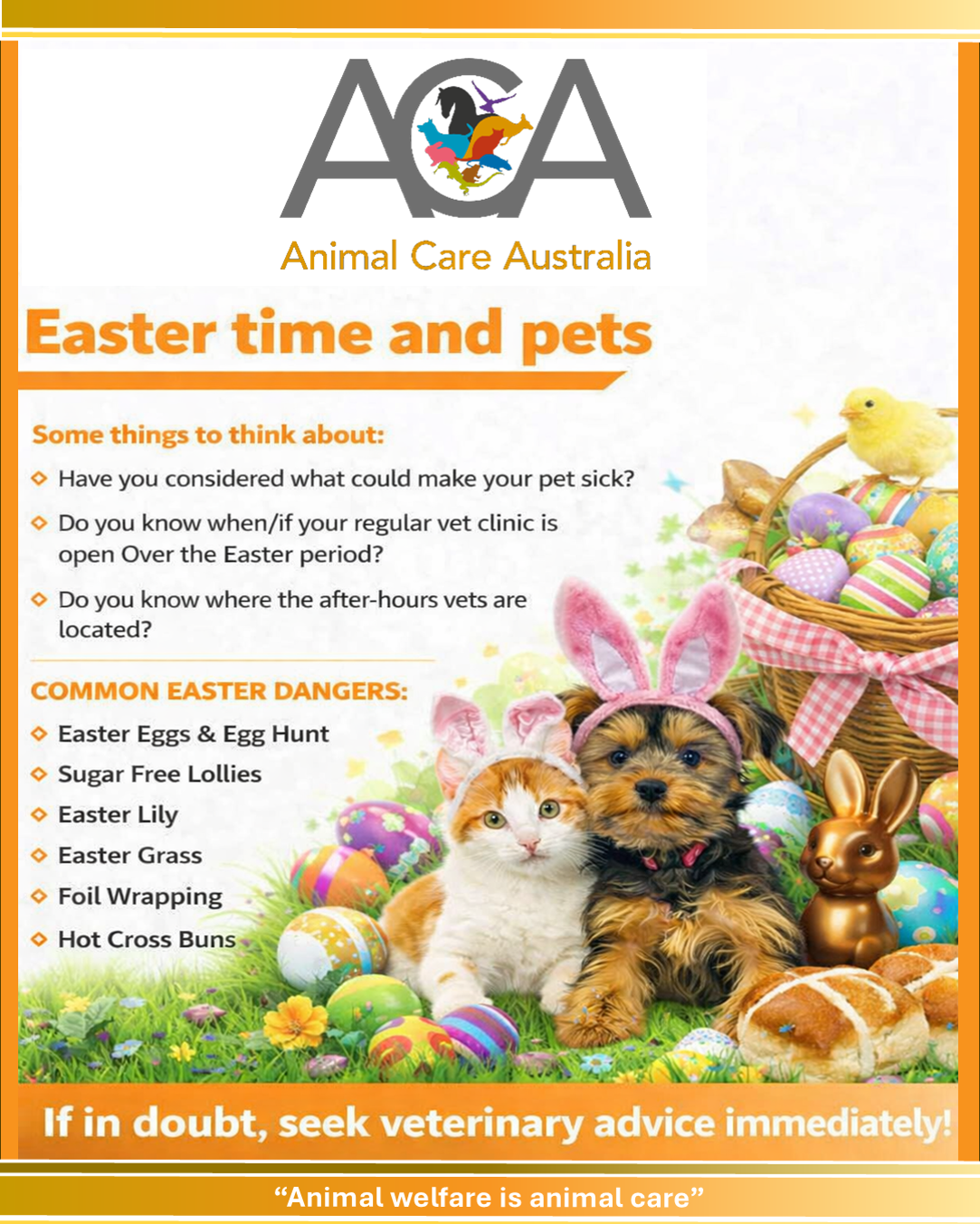
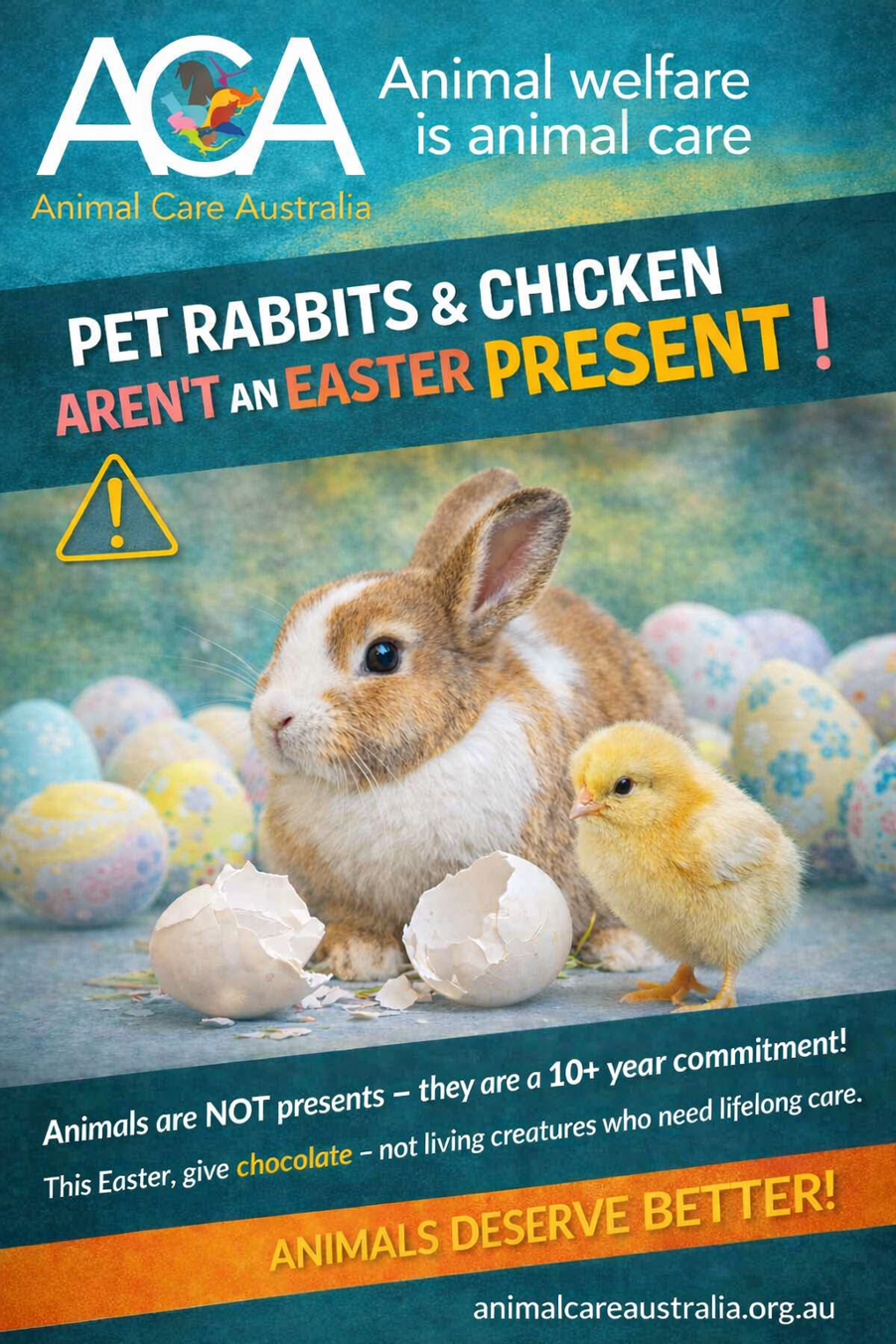
- Is buying a pet rabbit or chicken really the right Easter gift for your child?
- Have you considered what could make your pet sick?
- Do you know when/if your regular vet clinic is open over the Easter period?
- Do you know where the after hours vets are located?
Easter Eggs & Egg Hunt
If you are planning an Easter egg hunt, make sure your pets do not have access and count to make sure all eggs are found before allowing your pet back into the hunt area.
Many pets will eat the hidden treasures and unfortunately the theobromine & caffeine found in chocolate can make your pet very sick.
Foil Wrapping
Not only is the chocolate egg dangerous, the foil wrapping they come in can also pose a problem. Some pets may eat the wrapping, which can become a dangerous intestinal obstruction.
Hot Cross Buns
Hot Cross Buns are delicious and no Easter would be quite right without them.However, as they contain sultanas, avoid feeding them to your pets. Unfortunately Sultanas, Grapes and Raisins contain an unknown toxin that can cause kidney failure in some dogs. This fortunately has rarely been seen in Australia.
Sugar Free Lollies
Xylitol the artificial sweetener found in many chewing gums and sugar free lollies is toxic even in small doses to companion pets.Ensure that you know the ingredients in any lollies around the house, and most importantly keep them out of your pet’s reach
Easter Grass
The paper or cellophane nesting material that comes in many Easter baskets poses a problem if swallowed.These could cause a linear foreign body, resulting in intestinal trauma or intestinal intussusception (a condition where the intestine telescopes in on itself).
Easter Lily
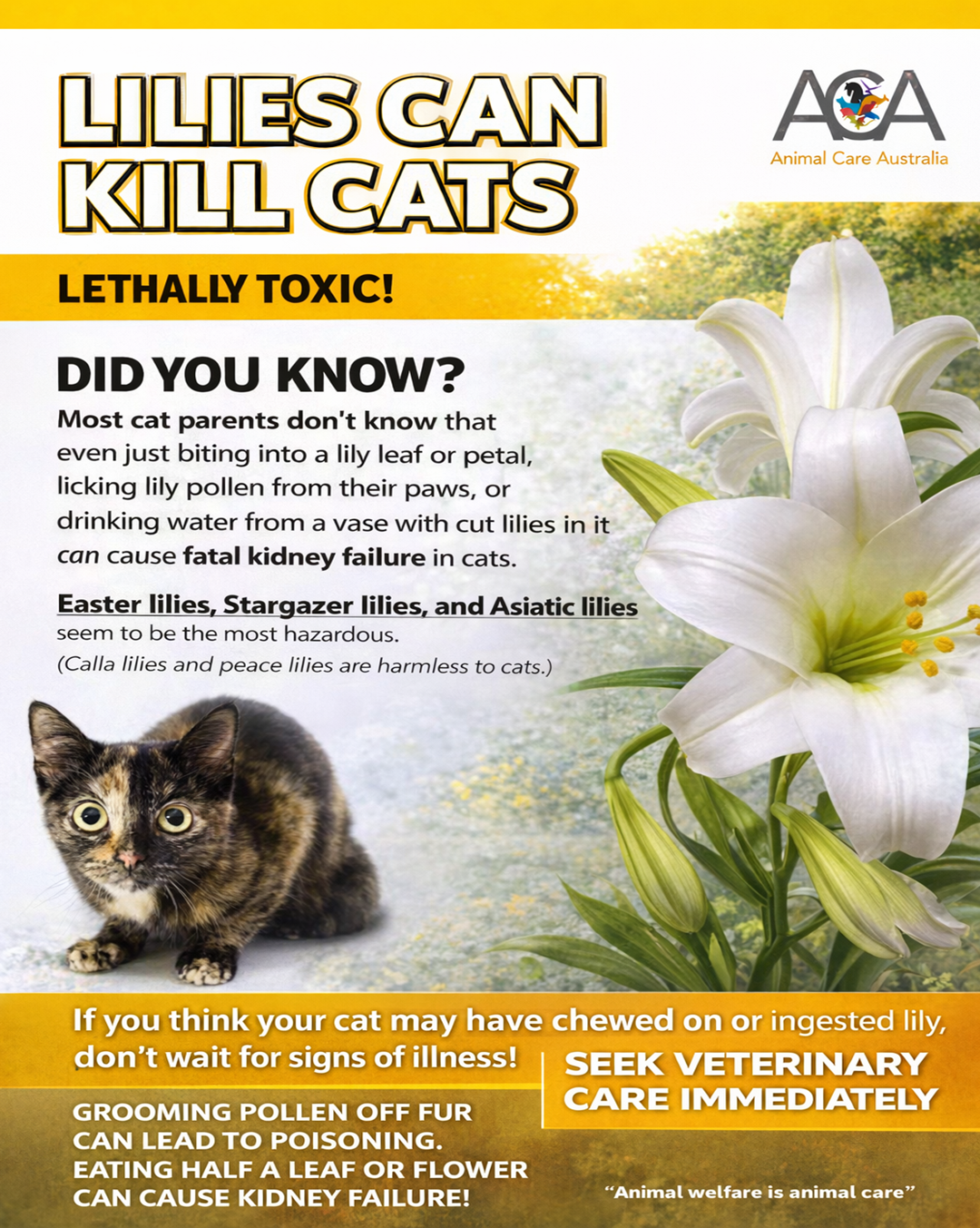
Did you know Lilies are toxic to cats ? Ingestion of the lily flower is very serious and can be fatal. All parts of the lily are toxic. This means any small amount of the stem, flower, leaves, or pollen ingested can potentially cause lily toxicity in cats.
Cats can even ingest this unintentionally by brushing against a lily flower and causing traces of pollen to fall on the cat’s coat, only to be ingested later through grooming.
If you think your cat has ingested lilies or you witness your cat chewing or licking on any part of the plant (including pollen), go straight to your vet regardless of whether your cat shows signs of illness.
Initially your cat may vomit and then appear normal, but it can take 24-72 hours for lily toxicity, which causes severe renal failure, to develop. This will be fatal if untreated or if treatment is delayed.
Many florists and cat owners are unaware of the toxicity of lilies.
For a full list of flowers that are not toxic you can go here: https://catprotection.org.au/cat-care-factsheets/factsheet-cat-friendly-flowers/?
When to see your vet
If your pet has chewed, swallowed or potentially chewed/swallowed any of the above, it is vital your pet is seen by a veterinarian immediately.
You should take your pet to the vet if he/she is unwell. Don’t wait for your regular clinic to re-open as even a delay of 24 hours could put your pet’s life at risk.
Poisons Helpline: 1300 869 738 https://www.animalpoisons.com.au/


