H5 bird flu Information for pet owners.
IMPORTANT NOTE: The situation in Australia with the detection of the H5 bird flu (H5N1 virus) is a developing scenario and will remain so for some time. Information and advice on this page is current as at this date: 27th August 2026.
Animal Care Australia will strive to keep guidance up to date – however it is best to also follow the official government information pages: birdflu.gov.au. (NB: This site does appear to run approx 24 hours behind with the reporting of confirmed cases)
There are Commonwealth and State Biosecurity and Environment Protection pages all with information. A quick search will point you to your state or territory department.
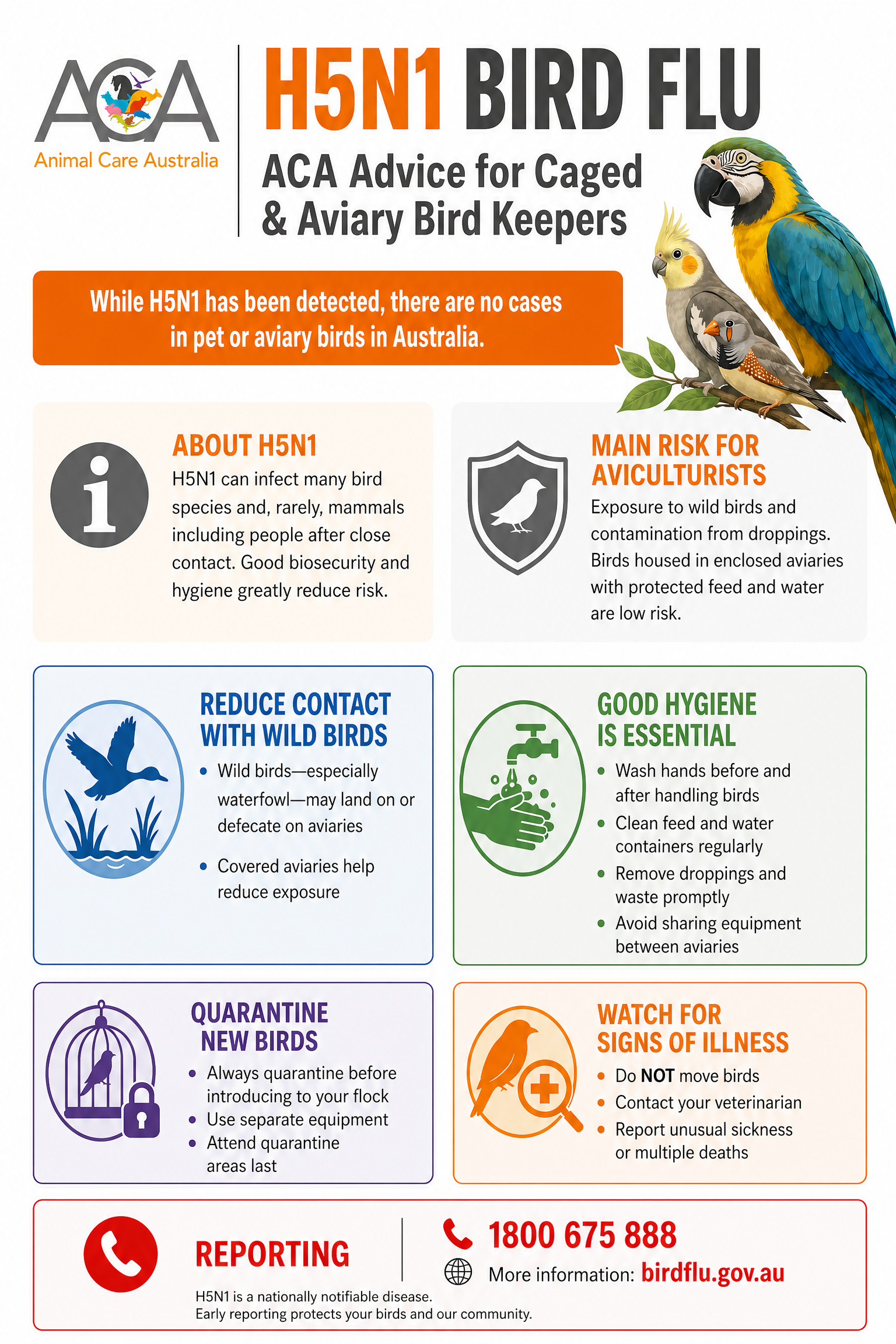
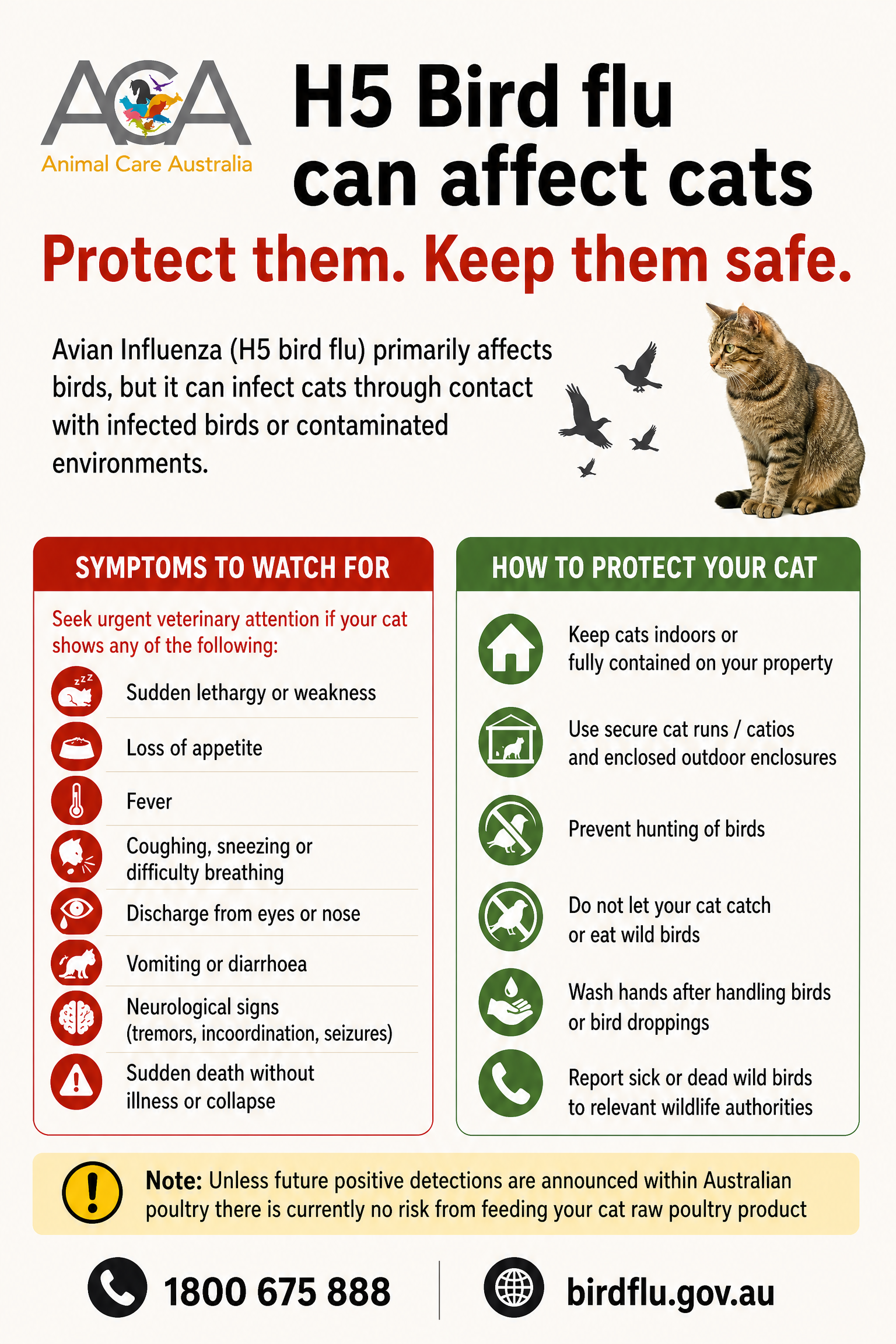
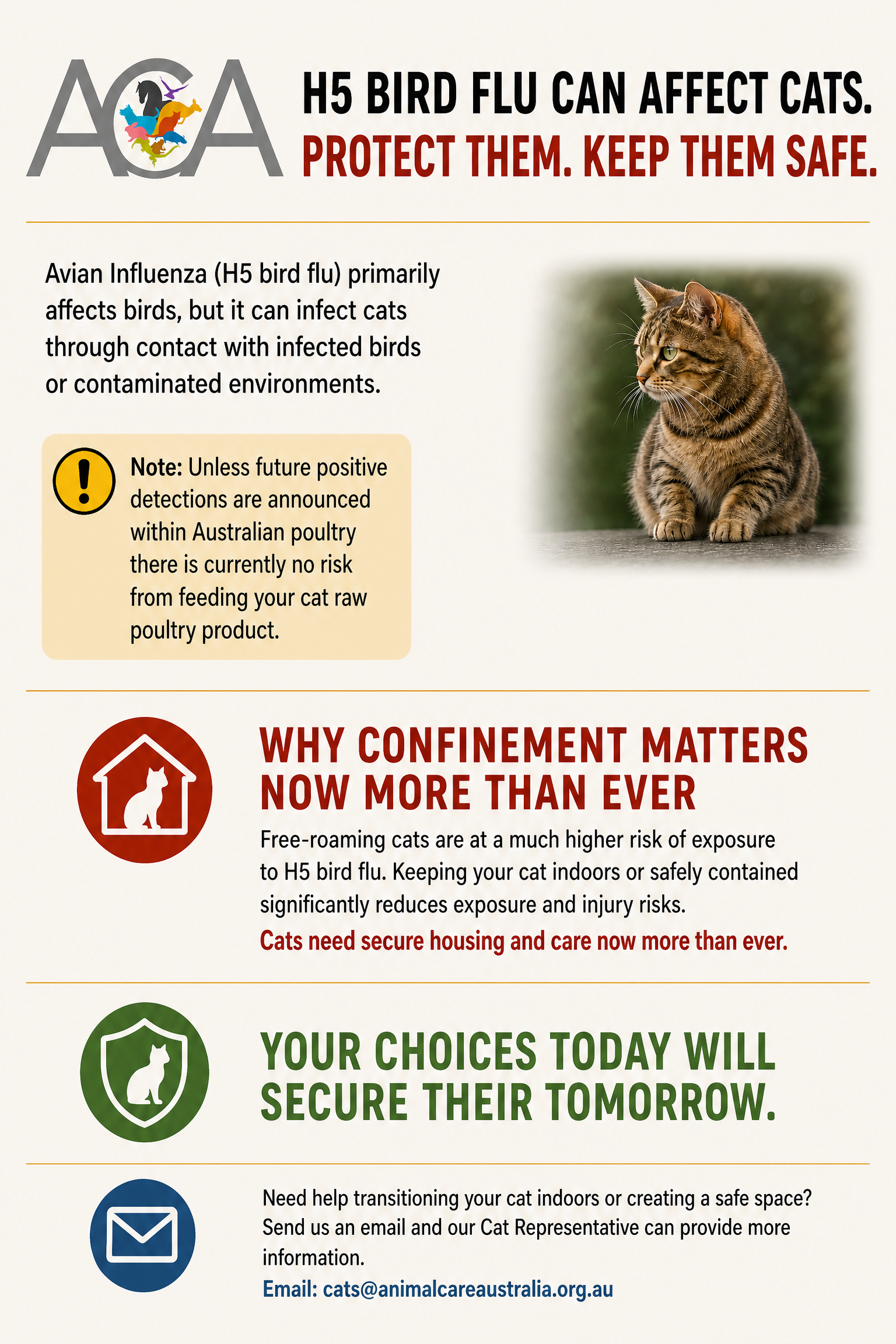
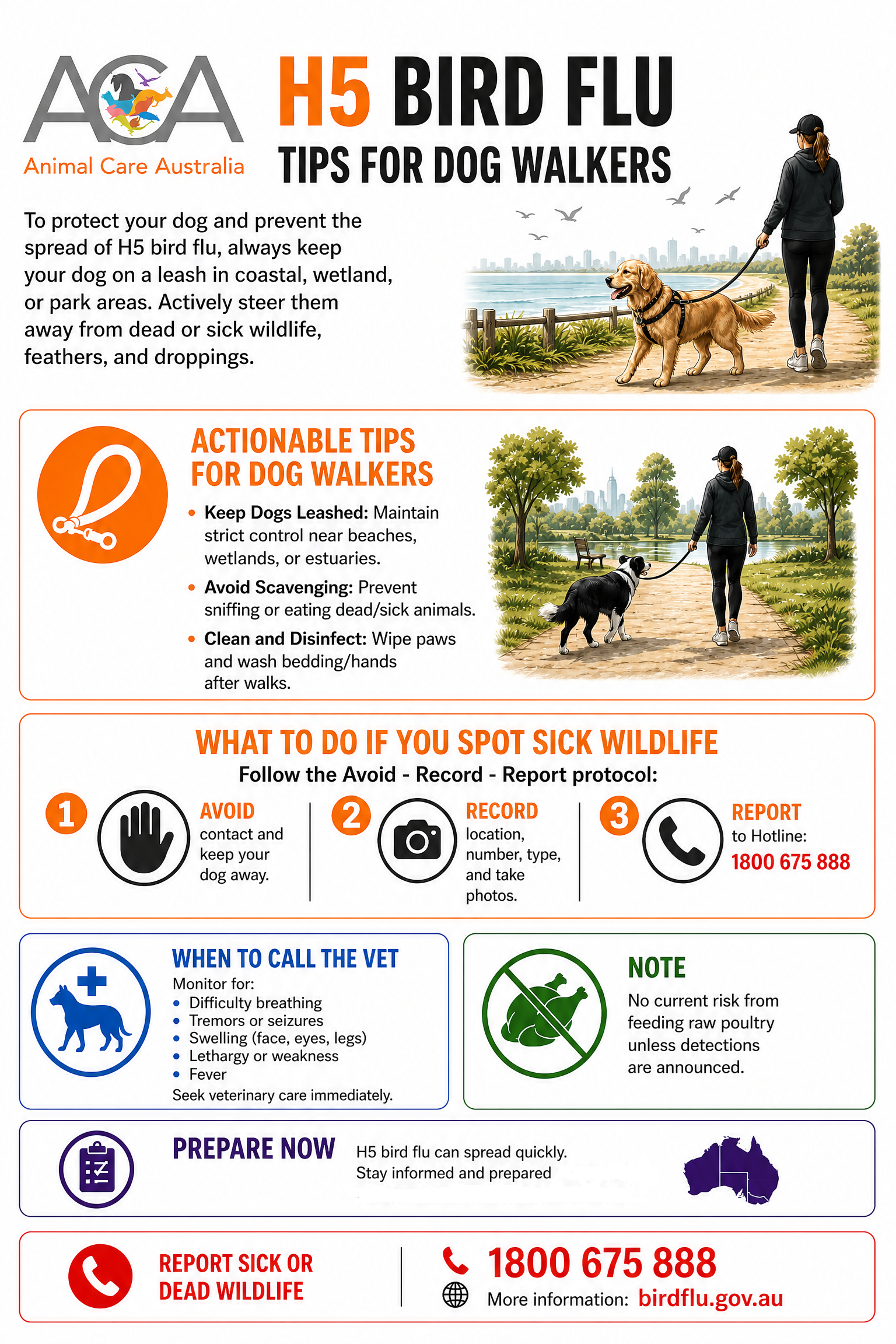
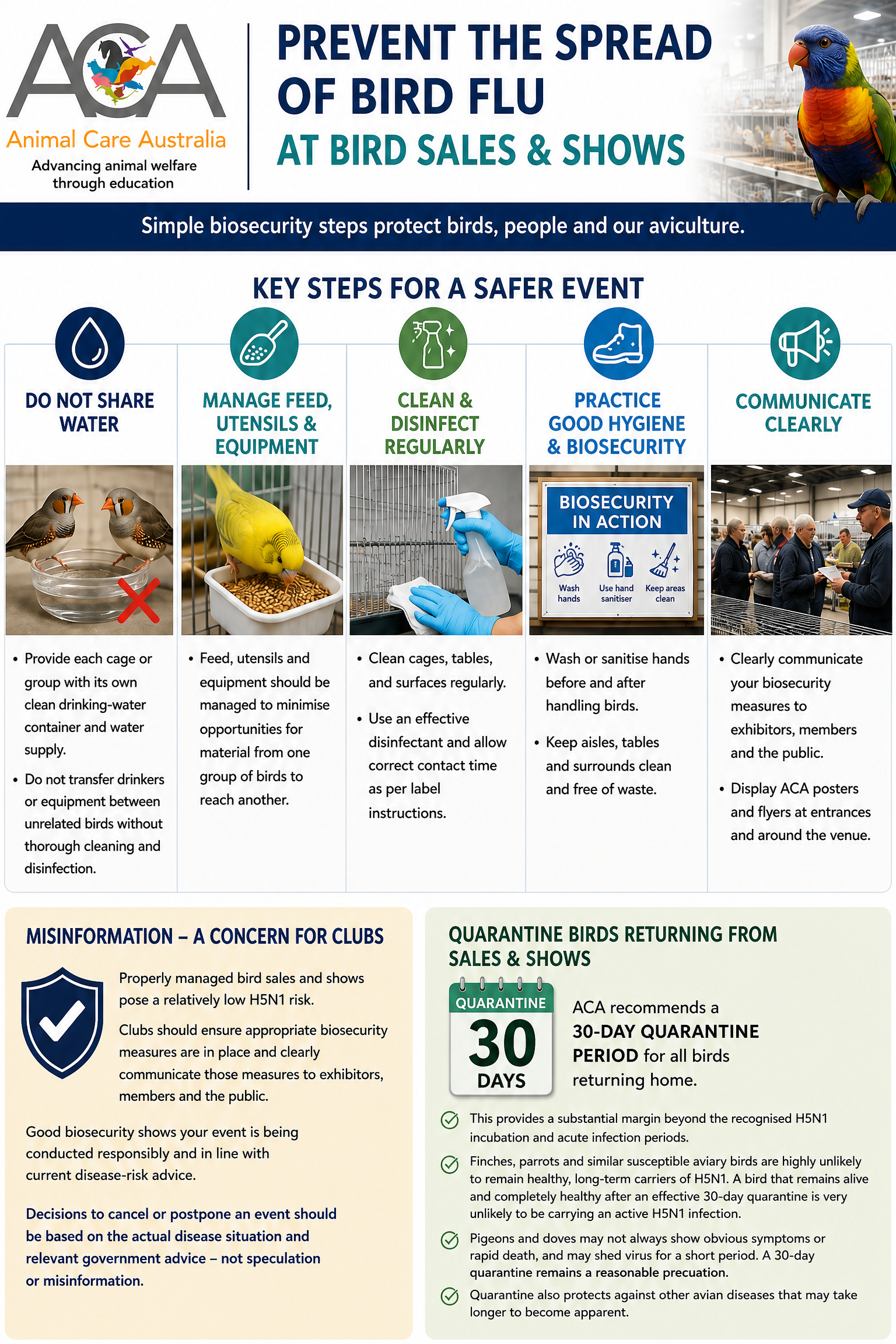
Animal Care Australia has produced some downloadable posters for you to share on social media or place into your member associations newsletters etc. The landscape-shaped poster for Bird Shows is for Associations running a show/sale to display at the entrance. These will be updated as necessary, and updates will be shared on our Facebook Page. Currently, our concentration is on the primary pet species that could come into immediate contact with the virus, however if the need for information regarding other pet species is required, we will expand these posters.
Animal Care Australia has also produced documents which can be downloaded here:
Practical Solutions for Australian Aviculturists or Advice for Cat Owners or Advice for Dog Walkers
Click on the posters or documents to download full-size versions
If you notice multiple sick or dead birds or other animals, you should not touch them or get too close. Record your location and report it to the 24-hour Emergency Animal Disease Hotline on 1800 675 888.
Wildlife rescuers and carers should contact their respective governing bodies to follow protocols for the safe rescue of sick or injured wildlife.
For a more detailed explanation about avian influenza and in particular the H5N1 virus there is a great article here: Nature’s Eye, written by Ron Glanville BSc, BVSc, MVS
Archive of advice statements:


