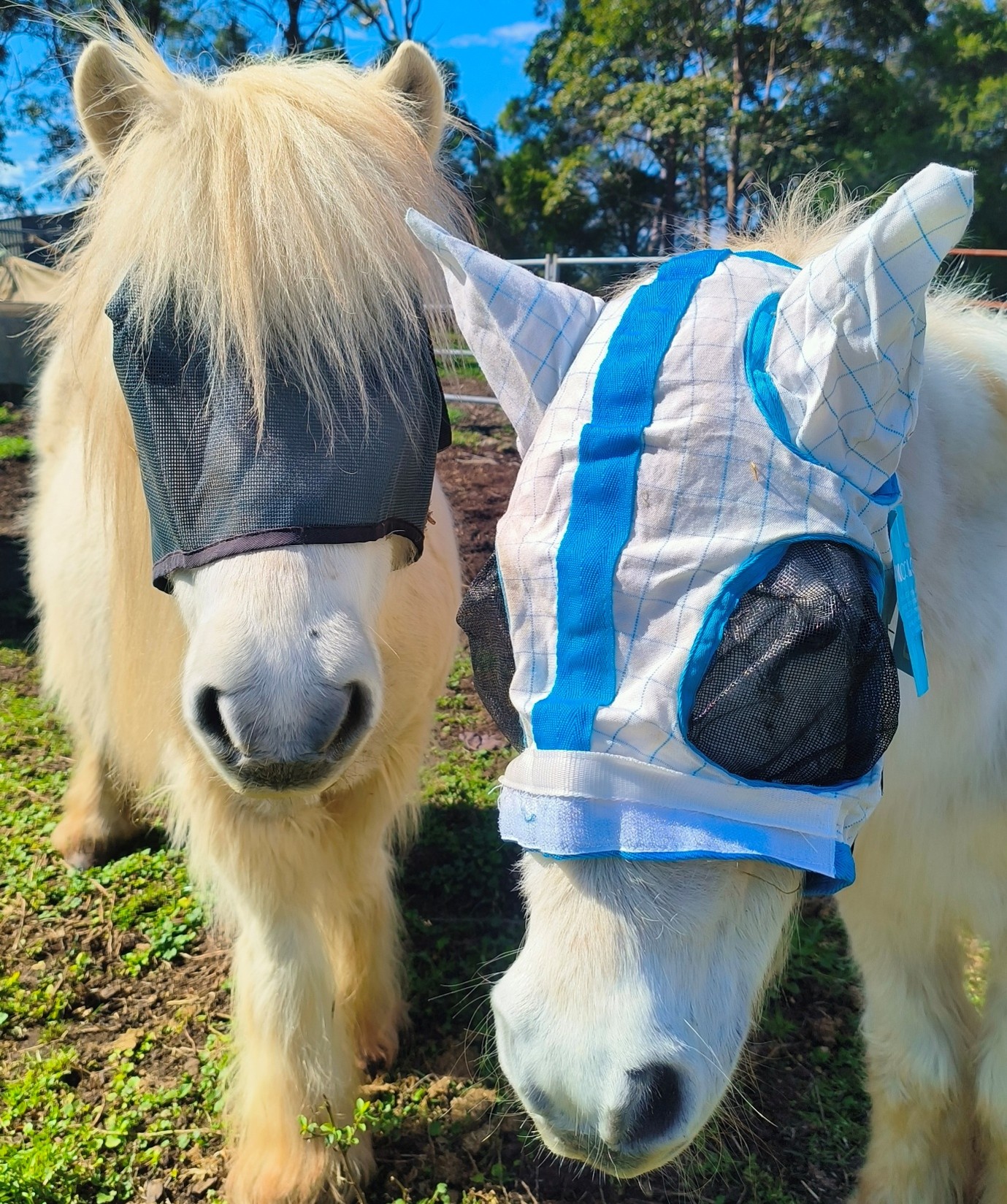
Its spring and it’s the time of year when we start hearing this from the public passing horses in paddocks. The horse is simply wearing a fly mask.
Horse fly masks are made of mesh, similar to a fly screen in your house, with Velcro closures, designed to shield a horse’s eyes, ears, and sometimes nose from flies, mosquitoes, midges, dust, and UV light. The Velcro easily comes undone if the horse becomes caught on anything. They are see through, lightweight and allow air flow to keep the horse comfortable, reduce irritation and protect the eyes.
🐴 What a fly mask actually does
- Blocks flies and insects — especially around the eyes, where horses are most sensitive. Some horses are allergic to the bites of midges, and need to covered as much as possible.
- Reduces UV exposure — many masks offer 70–90% UV protection, helpful for light‑skinned horses. Many horses become more sensitive to bright light as they age, and a mask acts like sunglasses, allowing them to enjoy their outside time more.
- Prevents eye issues — masks can reduce the risk of conjunctivitis and weepy eyes. It also protects eyes following first aid or vet care following an eye injury.
- Keeps debris out — dust, seeds, and grass can irritate eyes; masks act as a barrier.
- Calms sensitive horses — some horses become irritated when flies swarm their face; masks help them relax.
So, the horse isn’t blind? They can be, blind horses certainly do exist, and if they still have their eyes, they may not produce tears as they used to (or may produce more tears and weep, attracting flies). But it’s very unlikely that you will encounter a blind horse in a pasture with his friends.
So next time you see a horse with a mask enjoying the outdoors, know that the owner is the doing the best by the horse to protect him and keep him comfortable.
By: Karri Nadazdy – Animal Care Australia Horse & Livestock Representative. Published: September 2026 ACE Newsletter


