
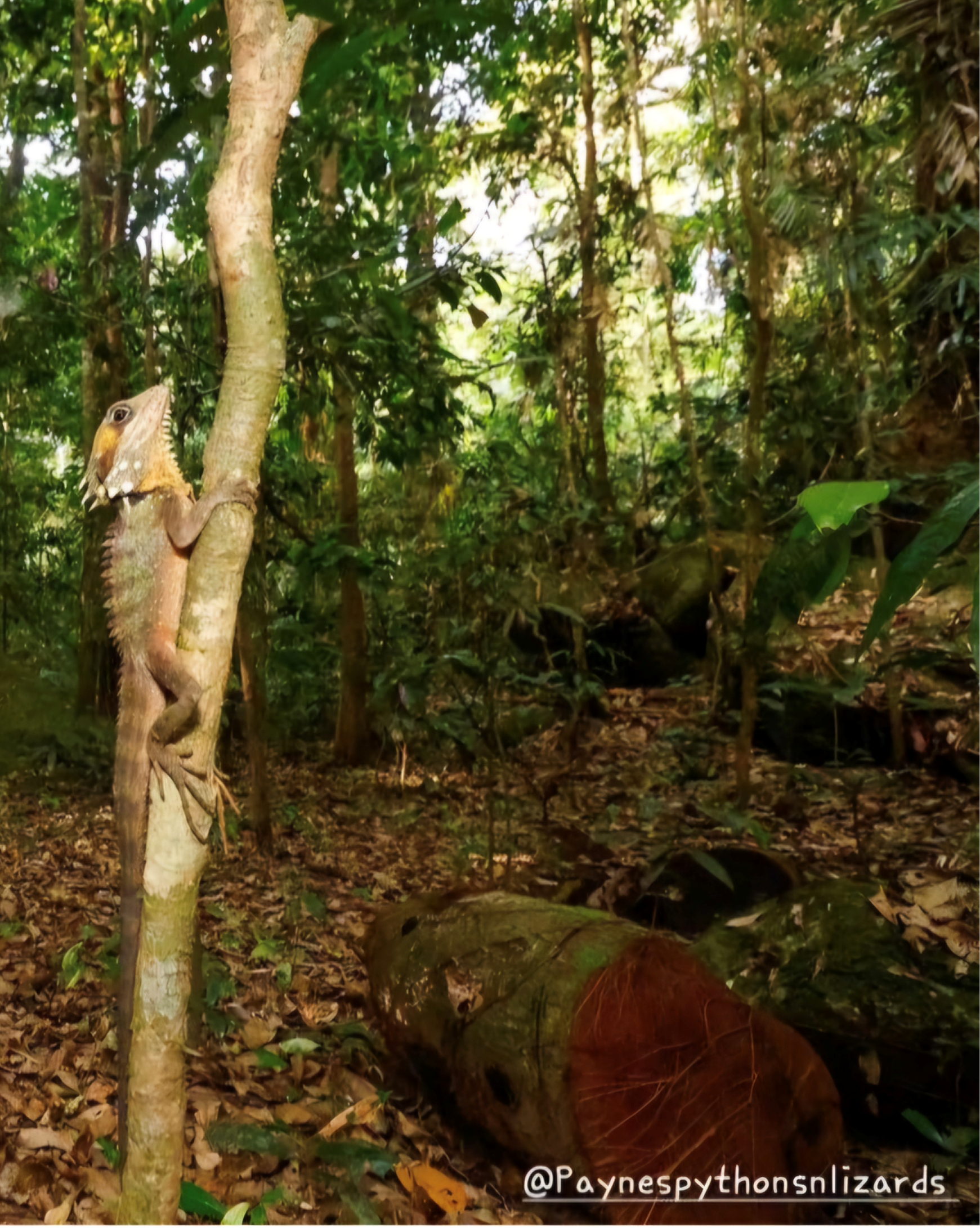
With 2024 being the year of the dragon, there’s no better way to kick off the year than with an article about our amazing dragons in Australia.
Currently in Australia, there are 11 genera and over 70 species of Dragon that call this continent home. Many are kept in private collections and the Bearded Dragon has become one of the most popular pets in the world.
In America, the humble Bearded Dragon is kept in more homes than any other pet. The hobby has seen remarkable colours and textures of bearded dragons on the market, nothing like their wild cousins.
If you’re thinking of owning a dragon, there are a few things you need to familiarise yourself with.
Firstly, native reptile ownership is the only way to legally own a reptile in Australia, and it is regulated. We have included some details about licensing requirements in each State latter in the article.
Bearded Dragons aren’t the only dragons to be celebrated in the keeping hobby. Lets go through a few to show you the wide variety that are being kept.
Bearded Dragons
(pictured on the cover of the newsletter)
There are several species of bearded dragon being kept in captivity. These include, Central, Eastern, Pygmy and Western.
They are all oviparous (egg layers) and are generally found in hotter and drier areas of Australia. In the wild, they can often be seen perched up high, surveying their territory and communicating with other dragons by using a series of head bobs and arm waves. They really are great to just watch with their communication.
Water Dragons
A larger species of dragon found around waterways on the Eastern Coast of Australia from Victoria up to northern Australia. There are two recognised subspecies of Water Dragon; the Eastern Water Dragon, Physignathus lesueurii lesueurii and the Gippsland Water Dragon, Physignathus lesueurii howittii.
They generally enjoy cooler climates.
They are sexually dimorphic with the males being larger and more brightly coloured with patches of red under the belly. They are often kept in large, outdoor enclosures as they are quite tolerant to temperature extremes.
Forest Dragons
Found in the cooler rainforest environments of Eastern Australia from the central coast in NSW up in the far north of Qld. Boyd’s Forest Dragon males are so colourful and you will mostly find them climbing around the trees chasing the little bits of dappled sun that peaks through the tall canopy. Another species that is sexually dimorphic, the females are smaller and less colourful. Southern Angle Headed Dragons are perfectly camouflaged to hide in their forest habitat. In captivity, their colour and secretive nature make them perfect for display tanks.
Central Netted Dragons
Unlike may other dragon species, netted dragons love to live in communal groups. They are a smaller but brightly coloured dragon that has perfectly adapted to living in captivity. Having a large tank in your lounge room, will make you watch the tank more than the TV. They have awesome little personalities and their antics will have you fascinated. In the wild, they can be seen perched atop rocks of piles of dirt watching for the next tasty morsel to run across their path or communicating with other dragons in the area. If something startles them then they will quickly retreat to a nearby burrow that will have several exit holes which they are always excavating.
Reptile licences in New South Wales
In New South Wales, native reptiles are protected by law. It’s illegal to take a reptile from the wild or release an unwanted one back into the wild. If you want to purchase a reptile, it needs to be bought from a licensed dealer or broker. There are different licences depending on the type of reptile and how many of them you’d like to keep. Learn more here.
Reptile licences in Queensland
In Queensland, a recreation wildlife licence is required, depending on the type of wildlife you’re hoping to keep. Strict conditions apply that prohibit the owner from breeding their wildlife or selling or giving away wildlife that is held under the permit. Learn more here.
Reptile licences in Victoria
In Victoria, there are four licence types to suit the variety of wildlife (and reptiles) that can be kept. Plus, there are some types of wildlife that can be kept without a permit (such as the Eastern blue-tongue Skink). For other reptiles, though, it’s important to refer to the Wildlife Regulations of 2013 to determine which licence you need for your reptile. Learn more here.
Reptile licences in South Australia
In South Australia, it’s the Department for Environment and Water that regulates the ownership of native animals, including reptiles. You will need a permit if you want to keep dragons (and other reptiles) with the exception of the Central Bearded Dragon which is exempt in South Australia. Learn more here.
Reptile licences in Australian Capital Territory
In the ACT, the majority of reptiles are protected and under the Nature Conservation Act 1980, however, there are some species that are exempt from licensing regulation, including the Eastern Bearded Dragon. Learn more here.
Reptile licences in Western Australia
In Western Australia, the regulation of wildlife is under the Department of Biodiversity, Conservation and Attractions. Again, whether or not the reptile you’re interested in owning is regulated, depends on the species. Learn more here.
Reptile licences in the Northern Territory
In the Northern Territory, the majority of reptiles require a permit in order to be kept as a pet in captivity. However, there are some species that are exempt such as the Central Bearded Dragon and Central-netted Dragon. Learn more here.
Reptile licences in Tasmania
In Tasmania, reptiles and amphibians are protected under the Nature Conservation Act 2002 and the Threatened Species Act 1995. Numbers of each species permitted are restricted. Learn more here.
Codes of Practice
Most states and territories have Codes of Practice that must be followed when keeping reptiles.
There are also many care sheets online for the keeping of the different dragon species. While these are all a good start, a great number are not produced in Australia and often obtain false or misleading information usually based on the personal opinions of those putting the information together. The best advice will firstly come from the breeder of the dragons that you are looking to obtain from and secondly from your local herpetological/reptile society. The societies will be able to put you in contact with other keepers. Better still join one and get to meet them all in person.
Quick Facts
With the right care dragons can live for up to 10 years
- UV lighting and heating is necessary
- A varied diet is required (fruit, vegetables and live prey)
- Central Bearded Dragons can grow up to 50cm long, whilst Dwarf Bearded Dragons grow to only 35cm.
- Central Netted Dragons are the smallest at around 25cm long but also live the shortest lives – averaging between 4 – 6 years.
- Dragons can usually be sexed from around 7 months of age or 15cm in length
Remember: Ask questions, research the species you want to keep, and don’t be afraid to seek advice if you feel something isn’t right with your dragon.
By: Joanne Payne – Animal Care Australia Reptile & Amphibian Representative. Originally published: March 2024 ACE Newsletter.


