
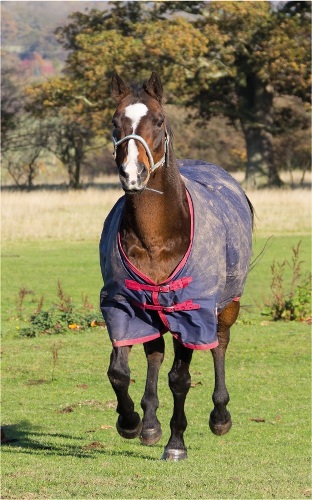
Most of Australia has very mild winters compared to other parts of the world, and most healthy horses do not need rugs through the winter at all.
Horses have a much wider thermoneutral zone than people do. Humans feel comfortable (not too warm and not too cold) between 25-30°C. While horses are comfortable in a much wider range of 5-25°C. They prefer much cooler weather than we do, and we shouldn’t assume they are cold, just because we start to feel cold.
All horses need access to shelter (man-made or natural) to protect them from cold winds and rain. High fibre feed (such as grass hay) warms horses from the inside due to their digestive system which ferments fibre in the large intestine to break it down, generating heat. All horses should have access to fibre throughout winter for this reason. A horse’s winter coat will stand up and trap warm air keeping them warmer than a horse with a light rug on that flattens the hair. Horses in Australia do not need to be stabled, and most horses will be happier living outside.
Of course we all know someone who is too hot or too cold when everyone else in the room is comfortable, and horses have exceptions too.
Horses grow their winter coats in response to shorter daylight hours, not temperature. And this means horses with thick winter coats can be way too hot through Australian autumn and winter, sweating even on cold days, and they need partial clipping to help them cool down and be comfortable.
Horses and ponies that are overweight or obese should not be rugged and be partially clipped to help them burn energy to lose weight over winter. It’s common to clip these horses leaving to hair on their backs to allow rain to run off them without having to rug in wet weather, aiding more weight loss. They will not feel cold as long as they are provided access to fibre to eat. As horses cannot be left without access to fibre (grass or hay), winter is often the only time these horses can safely lose weight, without starving them, which is dangerous for horses, even for short periods. Horses evolved to lose weight over winter, ready to safely eat the high energy spring grass. Horses that are overweight or obese when spring comes are at very high risk of laminitis and founder, a life threatening metabolic condition, that is becoming an avoidable, but common problem. Its best to let these horses lose weight and rug them only once their goal weight is achieved.
Horses that will feel the cold and need some rugging include those that have been fully clipped (to keep them cool during exercise), have very fine coats, or are elderly, unwell or underweight. Most of these horses just need a mid-weight rug and a waterproof one during wet weather. Heavy winter rugs designed for snow and below freezing conditions in European winters are commonly sold in Australia but are generally unnecessary here. Horses shouldn’t feel warm or damp under their rugs.
It’s good practice to only rug horses when bad weather is expected. Horses that are soaked through in prolonged wet and windy weather will be very cold indeed. Especially if they do not have a roofed shelter to protect them and hay to keep them under that shelter.
Over rugging and over heating horses in our mild winters is a common problem in Australia -we feel the cold and assume our horses are cold too. The Bureau of Meteorology’s Feels Like temperature predictions can be very helpful when deciding whether to put a rug your horse or not, especially leading into winter when the weather is not really cold enough to rug, but we are really feeling that cold change.
Once deciding to rug a horse, then the next decision is how warm a rug do they need? It’s always less that you think, and having layers you can add or remove on different nights is better than just owning just one too-warm winter doona that your horse is sweating under.
Some people even buy adhesive aquarium thermometers (that are flat, and usually stick to the glass) to stick inside a horse’s rug to ensure they are not too hot, which is a cheap, safe and practical way to check.
If in doubt, its always better to under rug than over do it. A healthy horse won’t mind one bit! And let those fat ponies burn some extra calories while they can.
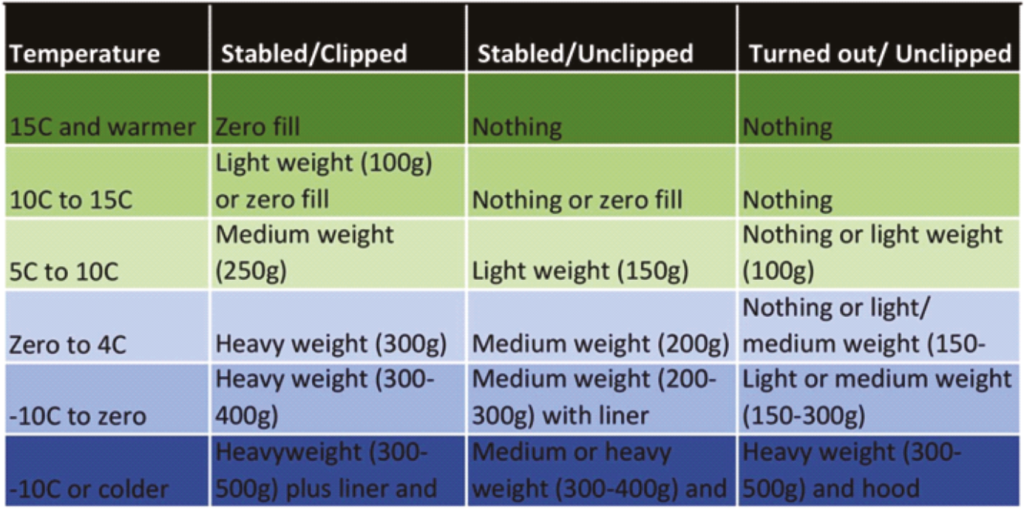
By: Karri Nadazdy – Animal Care Australia Horse & Livestock Representative. Published: June 2025 ACE Newsletter


