
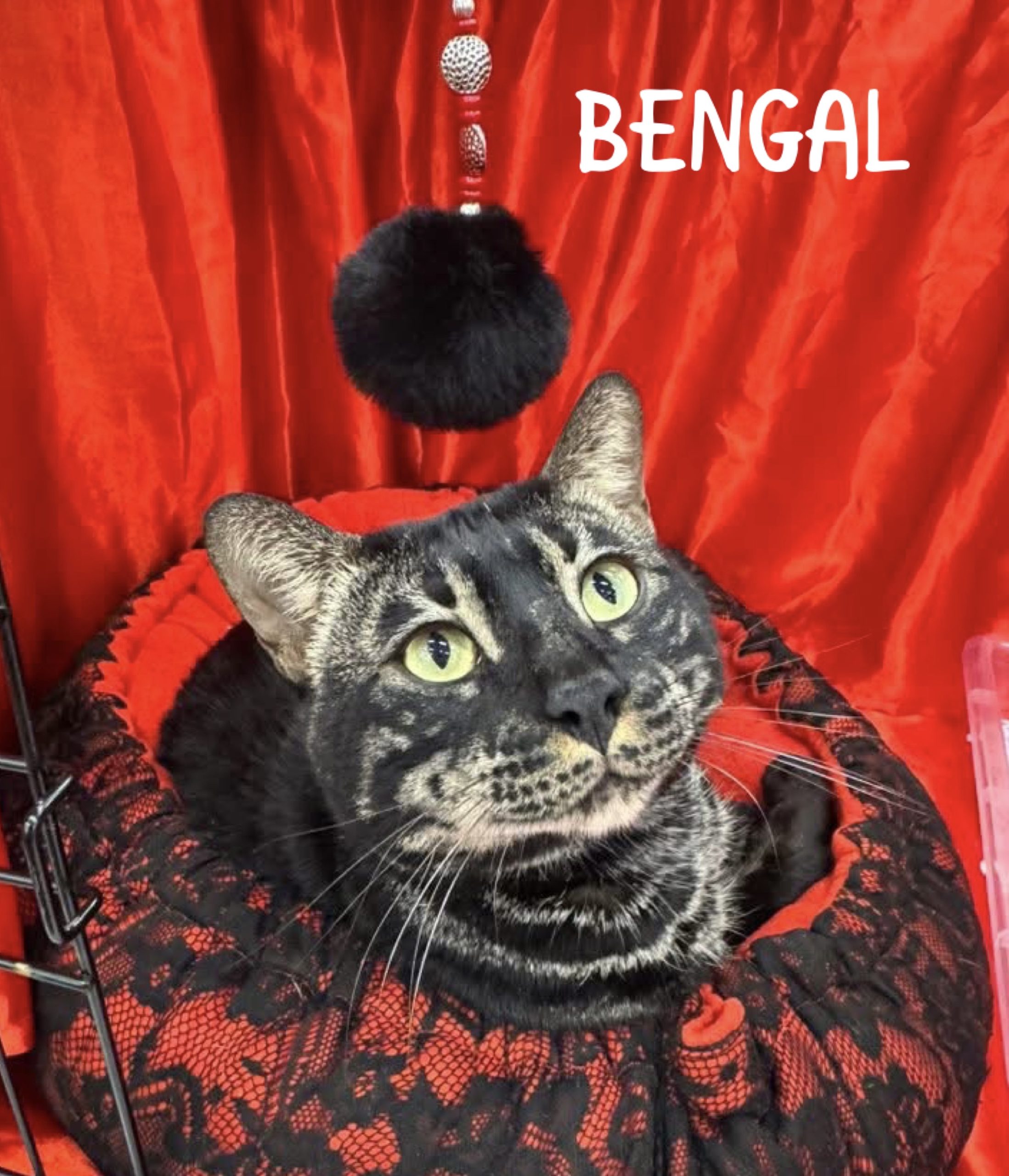
Import of domestic Bengal cat for non-commercial household pet purposes.
Note: This refers to a hybrid animal of a domestic cat (Felis catus) and an Asian leopard cat (Prionailurus bengalensis),
On 14 December 2024, the Department of Climate Change, Energy, the Environment and Water (DCCEEW) quietly announced a ban on the importation of Bengals into Australia. Under the current ban, no Bengals will be allowed to enter Australia from 1 March 2026.
It is reported to have been made on the basis that some cats imported into Australia were less than five (F5) generations removed from their wild ancestors which caused concern about potential risks to Australia’s ecosystem and wildlife.
There is no information accessible that supports that claim. Despite announcing there was a detailed policy review, the DCCEEW has not provided statistics showing how many Bengal cats actually entered into Australia who were less than five generations removed, or over what period of time or how DCCEEW identified that this had occurred. There is no Review title quoted on any of the announcements made by DCCEEW or by the Australian Department of Agriculture, Fisheries and Forestry (DAFF).
It is a misleading statement to classify the current day Bengal cat as a hybrid. Bengal cats these days are at least 5 generations away from the original matings which began in the 1940’s and are considered worldwide to be a domestic cat.
From the year 2000, Bengal cats have been classified at domestic cats on a global scale. The fact that their heritage lies in a cross mating with the Asian Leopard Cat is so far from the cats bred today.
Generation F4 or later Bengal cats today are classed as a fully domesticated by breeders and cat registries around the world such as TICA (The Internation Cat Association) as well as the Coordinating Cat Council of Australia (CCCA), Australian Cat Federation (ACF), and Australian National Cats (ANCATS) in Australia.
Bengal cats have a specific breed standard including patterns and colours with the cat registration bodies around the world which allows them to be shown in cat competitions.
The fact is that the importation criteria is also very strict with certified documentation that must supplied before an exemption to import was approved….again confirming the F5 status of the cat.
The reality is that the Bengal breed exists in Australia already and there is very strict criteria from Cat Registration Associations in Australia before a breeder can register an imported cat.
This ban impacts pet owners who have relocated overseas with their cat who was born in Australia and they will now no longer be able to bring their cat back when the return as there are zero exemptions under these changes.
Reputable breeders were left with very limited time to source the funds and a cat which met their requirements. Importation can be in excess of $10,000 for the cost of the cat, quarantine on both sides and flights. Locating and importing a cat is not an overnight process and can take months, if not years, and this ban has impacted the future of the breed within Australia.
Do Bengal cats pose no greater risk to wildlife than any other domestic cat ?
Contrary to the misguided beliefs of the Invasive Species Council, the Bengals’ temperament, genetic makeup, and behaviour are domestic. With responsible ownership and containment, the impact on wildlife is zero – which applies to all cat breeds.
The impact of any cat on wildlife depends on how it is managed by its owner, not its breed.
Responsible ownership, not breed type, determines wildlife outcomes. Cats that are kept indoors, contained in secure outdoors enclosures or are supervised if outside do not have the opportunities to harm wildlife regardless of whether they are purebred breed or of unknown parentage.
Many breeds show similar or even stronger prey-chasing instincts.
Predatory behaviour in cats depends more on individual temperament and environment than on breed. Bengals today (F4 and later) are many generations removed from any wild cat ancestry. Their behaviour, physiology, and environmental impact is no different from any other breed classed as being domesticated (whether this is mixed parentage or purebred/pedigree).
All cat registration bodies within Australia recommend and support cats being safely contained and for cats not kept by breeders to be desexed. Responsible and ethical breeders advocate for keeping cats contained (for their safety as well as the environment), and the majority of kittens or cats from breeders will be desexed before going to their new homes.
Threats to Wildlife
The threat from cats to wildlife and the environment are the unfortunate cats that do not have a loving home and a supply of food from their owners. It is the feral, stray and unowned cats that are the product of irresponsible pet owners that live and breed without human care or intervention, who are not contained and hunt for survival.
The cats that fall into these categories are not to blame, as some of them would have had an owner at some point but were allowed to roam and were not desexed. There must be a plan, including funding, to manage the cats that fall into the unowned, stray and feral cats categories.
Impacts to Genetic Diversity:
There is an increased risk of inbreeding if breeders within Australia are unable to source new and unrelated bloodlines from other countries.
With a narrower gene pool, breeders are forced into higher COI which means the increased health issues in general and increased risks of inheritable diseases. These include:
- Less variation in immune systems leading to a weaker disease resistance
- Increase of homozygosity meaning recessive gene mutations are more likely to pair up
- Rare mutations that may have been present in the early breeding cats becomes increased through future generations
Limited outcross breeding may increase known health issues in this breed, and responsible breeders now use a range of tests and practices to minimise the likelihood of their cats passing on these diseases to their offspring.
What Now ?
We are now forced to wait…..until the review of the public consultations has been completed.
Animal Care Australia provided feedback to the consultation and wrote to the Federal Environment Minister. Both can be found on our website:
Consultation response Letter to Environment Minister


The ban on Bengals is illogical. Keeping bengals a proper pedigree is what would ever prevent some slither of asian leopard superior hunting genes escaping into the ordinary domestic cat gene pool. Leaving bengal breeders the option to have corrective breeding options from more varied international sources without restricting how far back the cats are to the asian leopard would aid in keeping pedigree show standards as well as the Bengals constitution. A proper standard of Bengal may be a superior hunter with a very driven predatory nature. Yet it would not survive for long in Australian conditions. It totally lacks the caution required to negotiate the hazards of urban, suburban and country environments in Australia. It has a digestive system that is unable to process many foods that are not in the Asian leopards background plus generally is not found near people. Nor have bengals had mothers that raise kittens to cope in the wild, just a gung ho rush to go out and hunt if escaping outdoors. A Bengal can’t cope with extreme environments What is suited to thrive in Australia is the ordinary outdoor domestic cat with or without a home. It’s small enough to stay inconspicuous while hunting, co exist around where people live, is somewhat familiar taking some caution with local hazards and threats, can survive by eating some portion of largely processed protein based sources to get adequate calories. Plus domestic cats can be fond in a huge range of Australian environments.