
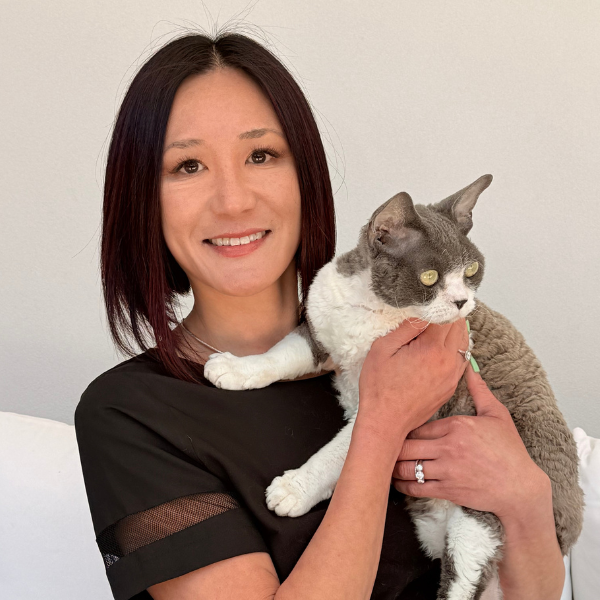
Originally published in the Sydney Morning Herald – 1st February 2026
Australia has welcomed about 1.5 million extra pet cats since COVID. They were perfect isolation companions: independent, affectionate, low-maintenance. While those additions to households may sound heart warming, a few years later, looking a little closer – as a veterinarian, lifelong cat carer, and representative of Animal Care Australia – what I’m seeing isn’t so comforting.
Alongside the surge in ownership is a rise in stray and anxious cats, and those unsettled by post-pandemic changes at home. Their anxiety, depression or behaviour shifts are often dismissed, but the increase is obvious in clinics and communities.
A change in behaviour might be more than your cat “just being a cat”, says Dr Tanya Phillips. It might be a sign of emotional distress, anxiety or depression.
Most owners want to do the right thing, but confusing behaviour is often misread. Some cats are surrendered; others are left to roam in the hope they “settle down”. And this has led to more unregistered, not-desexed and anxious cats roaming across Sydney and the east coast.
It has evolved into a significant welfare challenge. During lockdowns, cats filled an emotional gap. Now, their owners’ longer work hours and time away have returned. For animals, that change can be overwhelming. I see it every week in the clinic. A cat that hides under the bed, stops eating, or lashes out is rarely “just being a cat”. These are early signs of emotional distress, anxiety or depression.
While roaming pet cats do hunt, the bigger ecological impact comes from feral cats, not owned pets. Estimates often combine the two groups, which inflates the numbers and can blur the real welfare issue behind roaming behaviour.
In Greater Sydney, roaming pet cats are estimated to kill about 66 million native animals each year, although this figure is debated because many calculations assume all pet cats roam and hunt, which is not the case. National kill estimates in the billions refer primarily to feral, free-living cats rather than household pets.
Before it’s an environmental issue, it’s a welfare one. Roaming cats are usually distressed cats, and every stray reflects a broken connection between human stress and animal wellbeing.
Rescue and foster networks across NSW are full. Shelters are taking in surrendered pandemic pets and litters from roaming cats that are not desexed. Councils are stretched, and vets are managing the medical and behaviour cases that leave many families feeling they have failed their animals.
A recent NSW Legislative Council Inquiry into cat management recognised overpopulation as “clear and pressing” yet stopped short of recommending containment laws. Welfare groups, vets and local governments called this a missed opportunity, and I agree.
We already know humane solutions make a real difference. Across 11 NSW councils, desexing more than 2700 cats and microchipping 1700 reduced roaming populations by half and lowered complaints by 40 per cent. These programs work because they involve targeted, on-the-ground support, rather than assumptions about how all cats behave.
Where education and affordable desexing are available, cats and communities do better.
The emotional connection between humans and their pets is a two-way street and can be underestimated; cats read the room far more deeply than most people realise. Feline depression shows up quietly in the cats that stop grooming, hide more, withdraw from affection or simply fade into the background. Cats mirror the emotional landscape, and now life looks different. Burnout, financial strain and long work hours all affect the way we care for animals who rely on routine and predictability.
If we treated feline mental health as a legitimate welfare concern instead of a quirky footnote, we could prevent many of the behavioural problems that lead to surrender or abandonment.
This crisis is not unsolvable, but we can’t adopt our way out of it. It requires coordination between government, vets, councils and communities – a unified, evidence based approach that tackles both welfare and environmental impacts. Some steps are simple: keep cats indoors or in enclosed outdoor spaces; provide enrichment, play and predictability; desex early; build routines that work for people and pets; seek help when behaviour changes.
The care gap widened during the pandemic and has not been properly addressed since.
Containment laws work overseas. Large-scale desexing campaigns work here. What’s missing is political will.
Those 1.5 million extra cats were meant to be companions. They still can be.
By: Dr Tanya Phillips – Animal Care Australia Veterinary Representative. Published: March 2026 ACE Newsletter


Hi Dr Phillips,
You said “Containment laws work overseas.” Can you advise where overseas please?
I can’t locate any information which supports that claim.
Dear Ann,
Thank you for your comment.
I appreciate you asking for clarification, and I should have been more precise in how I phrased that point.
What I meant was that some overseas jurisdictions have introduced cat containment or roaming restrictions, usually at a local rather than national level. So it would be more accurate to say there are overseas examples of cat containment laws, rather than suggesting there is one universal overseas model. One example often cited is Walldorf in Germany, where local authorities introduced seasonal restrictions to protect endangered crested larks during breeding season.
I also want to reiterate that my comments about cat containment, including my reference to it working overseas, were made in the context of a broader point. This is not something that will be solved by one measure alone. It requires coordination between government, vets, councils and communities, with a unified, evidence based approach that addresses both welfare and environmental impacts. That is why I see containment as part of the solution, but not the whole solution.
More broadly, there is supportive evidence that reducing free roaming improves cat welfare as well as reducing impacts on wildlife. A review of the veterinary literature found that uncontrolled outdoor access is associated with higher risks of disease and parasites, injury or death, toxin exposure, and cats becoming permanently lost. You can read that review here:
https://pmc.ncbi.nlm.nih.gov/articles/PMC7070728/
A New Zealand study using animal-borne cameras on free roaming owned cats also found that these cats were regularly exposed to risks such as roads, altercations with other cats, and contaminated water sources, with the authors recommending safe containment or supervision to reduce those harms. That paper is here:
https://www.frontiersin.org/journals/veterinary-science/articles/10.3389/fvets.2019.00205/full
There is also an international study looking at cat owner decision making, which found that concerns about safety, wellbeing and wildlife all influence lifestyle choices, with road traffic accidents being the major concern among owners who kept their cats indoors. That study is here:
https://pmc.ncbi.nlm.nih.gov/articles/PMC7909512/
So while direct evidence that legislation itself increases lifespan is limited, there is good support for the welfare principle that keeping cats safely contained, or restricting unsupervised roaming, can reduce preventable harm to both cats and wildlife.
That said, my view is that the variability in cat containment laws across different councils in Australia also highlights an important limitation. These laws are generally directed at owned cats, and while they may encourage more responsible ownership, they do not address the large number of unowned, stray and semi-owned cats that are also contributing to overpopulation.
This is where ethical and welfare considerations are so important. Managing unowned cats is not something that can be solved fairly or effectively through a blanket rule aimed only at owned animals. It requires a more considered approach that takes into account animal welfare, humane management, desexing, identification where possible, community education, and practical pathways that reduce suffering while also addressing the impact on wildlife and the broader community.
So while containment can absolutely be part of the solution, it is not the whole solution. In my view, any meaningful response to cat overpopulation needs to address both responsible ownership of pet cats and the ethical, welfare based management of unowned cats as well.
Kind regards,
Dr Tanya Phillips