
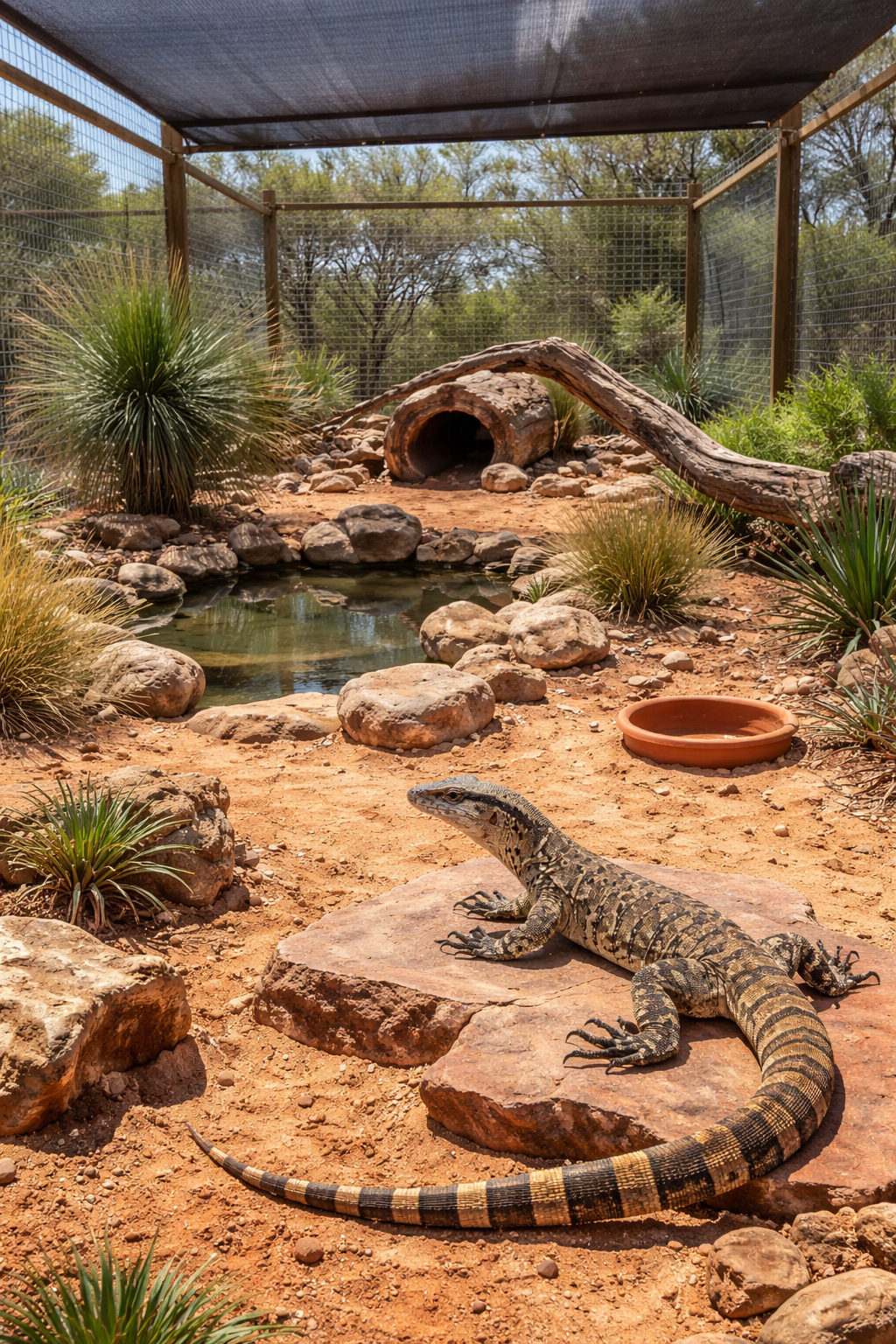
For many reptile keepers, there comes a time when we start to wonder: How can I safely keep my reptile outside? A visit to the zoo often sparks the idea. Seeing reptiles thriving in open, naturalistic outdoor enclosures makes us consider how we might replicate something similar at home—while still maintaining the highest standards of animal welfare.
One of the greatest benefits of outdoor keeping is access to natural sunlight. While artificial UV lighting has improved dramatically over the years, nothing truly compares to the full spectrum of natural sunlight. For species such as monitors and skinks in particular, exposure to natural UV can support:
- Healthy vitamin D3 synthesis
- Improved calcium metabolism
- Stronger bone development
- Enhanced appetite and activity levels
- Natural basking and behavioural expression
Providing natural sunlight is widely regarded as best practice where it can be done safely and responsibly.
Is Your Species Suitable for Outdoor Keeping?
Before moving any reptile outdoors, research is essential. A key question to ask is:
Is this species naturally found in my local climate?
If your reptile occurs naturally in your region, outdoor housing may be relatively straightforward. However, even native species may require additional considerations. If your climate experiences cold winters or unpredictable weather, you may need to provide:
- A heated hide
- Insulated shelter
- Additional basking areas for cooler days
- A suitable brumation space
Some reptiles can be kept outdoors during the warmer months but must be brought inside over winter, unless you can provide appropriate brumation conditions.
Providing Shade and Thermal Choice
While access to sunlight is beneficial, reptiles must always have the ability to escape the heat. Overheating can be fatal.
Every outdoor enclosure must provide shaded areas. This can be achieved through:
- Natural cover such as shrubs, bushes, or small trees
- Logs and rock structures
- Man-made shade cloth or roofing panels
The goal is to create a temperature gradient, allowing your reptile to thermoregulate naturally—basking when needed and retreating to cooler zones when required.
Security and Predator Protection
Outdoor enclosures must be secure.
Consider:
- Is the enclosure escape-proof?
- Can neighbourhood cats access it?
- Are there predatory birds in your area?
- Can rodents dig underneath?
Fully enclosed structures are often the safest option, particularly in suburban environments. Mesh roofing, dig-proof barriers, and secure locking systems are critical components of responsible outdoor housing.
For keepers unable to construct a permanent enclosure, temporary outdoor pens can be used during supervised periods. These allow reptiles to benefit from natural sunlight while still maintaining control and safety.
Research and Community Support
Keeping reptiles outdoors can be incredibly rewarding. Watching natural behaviours emerge—true basking, exploration, interaction with live plants—adds a whole new dimension to reptile keeping. However, outdoor housing requires careful planning and thorough research.
Speak with experienced keepers who have successfully housed your species outdoors. Join your local reptile society—these groups are a wealth of practical knowledge and first-hand experience. Learning from others can help you avoid costly mistakes and ensure your reptile’s welfare remains the top priority.
In short, outdoor reptile keeping can provide a more natural and enriching environment—but only when done thoughtfully, safely, and with proper preparation.
By: Joanne Payne – Animal Care Australia Reptile & Amphibian Representative. Published: March 2026 ACE Newsletter


