Australia’s animal care and training industry is at a pivotal crossroads. As demand for companion animal services continues to grow—spanning pet care, training, breeding, grooming, boarding, and assistance animals—the absence of consistent, enforceable national regulation is becoming increasingly difficult to ignore.
While many dedicated professionals operate with integrity, skill, and a genuine commitment to animal welfare, the reality is that the industry remains largely unregulated in key areas. This creates significant risks—not only for animals, but also for workers, businesses, and the broader community.
An Unregulated Future: What’s at Stake?
Without meaningful and consistent regulation, the industry faces a number of escalating challenges:
1. Inconsistent Welfare Standards
Animals may be exposed to varying levels of care depending on who is providing the service. Without minimum standards, there is no safeguard against poor handling practices, inadequate housing, or inappropriate training methods.
2. Unqualified Operators
Currently, in many sectors of the industry, individuals can operate without formal qualifications or demonstrated competency. This opens the door to misinformation, outdated practices, and, in some cases, significant harm to animals.
3. Workforce Vulnerability
Workers in unregulated environments often face unclear expectations, limited protections, and a lack of structured career pathways. This contributes to burnout, high turnover, and a workforce that is undervalued despite the complexity of the work.
4. Consumer Confusion
Pet owners are increasingly seeking professional services but have little guidance on how to identify reputable providers. Without regulation or accreditation frameworks, trust becomes difficult to establish and maintain.
5. Reputational Risk to the Industry
A small number of poor practices can have widespread consequences, damaging public trust and undermining the credibility of the many professionals doing the right thing.
The Case for Regulation: Raising the Bar Across the Industry
Regulation is not about restricting the industry—it is about strengthening it. When implemented effectively, it provides a framework that supports both animal welfare and professional integrity.
1. Improved Animal Welfare Outcomes
Regulation establishes minimum standards of care, handling, and training. This ensures that all animals—regardless of where they are housed or handled—receive appropriate, humane, and evidence-based care.
2. Professional Recognition and Career Pathways
A regulated industry recognises skills, qualifications, and experience. It creates clear entry points, progression pathways, and professional identity for those working within the sector.
3. Safer Workplaces
With defined standards comes improved Workplace Health and Safety (WHS) practices, better risk management, and clearer reporting frameworks—protecting both workers and animals.
4. Consumer Confidence
Regulation provides transparency. Pet owners can make informed decisions, knowing that providers meet recognised standards and are accountable for their practices.
5. Industry Sustainability and Growth
A regulated framework supports long-term growth by attracting investment, improving workforce retention, and aligning the industry with broader national expectations around animal welfare and professional standards.
Finding the Balance: Practical, Industry-Led Regulation
It is essential that any move toward regulation is industry-informed, practical, and proportionate. Over-regulation or poorly designed frameworks risk placing unnecessary burden on small businesses and limiting accessibility.
The goal should be a nationally consistent approach that:
- Recognises existing qualifications and experience
- Supports upskilling and transition pathways
- Engages industry bodies, training organisations, and employers
- Focuses on outcomes, not just compliance
A Shared Responsibility
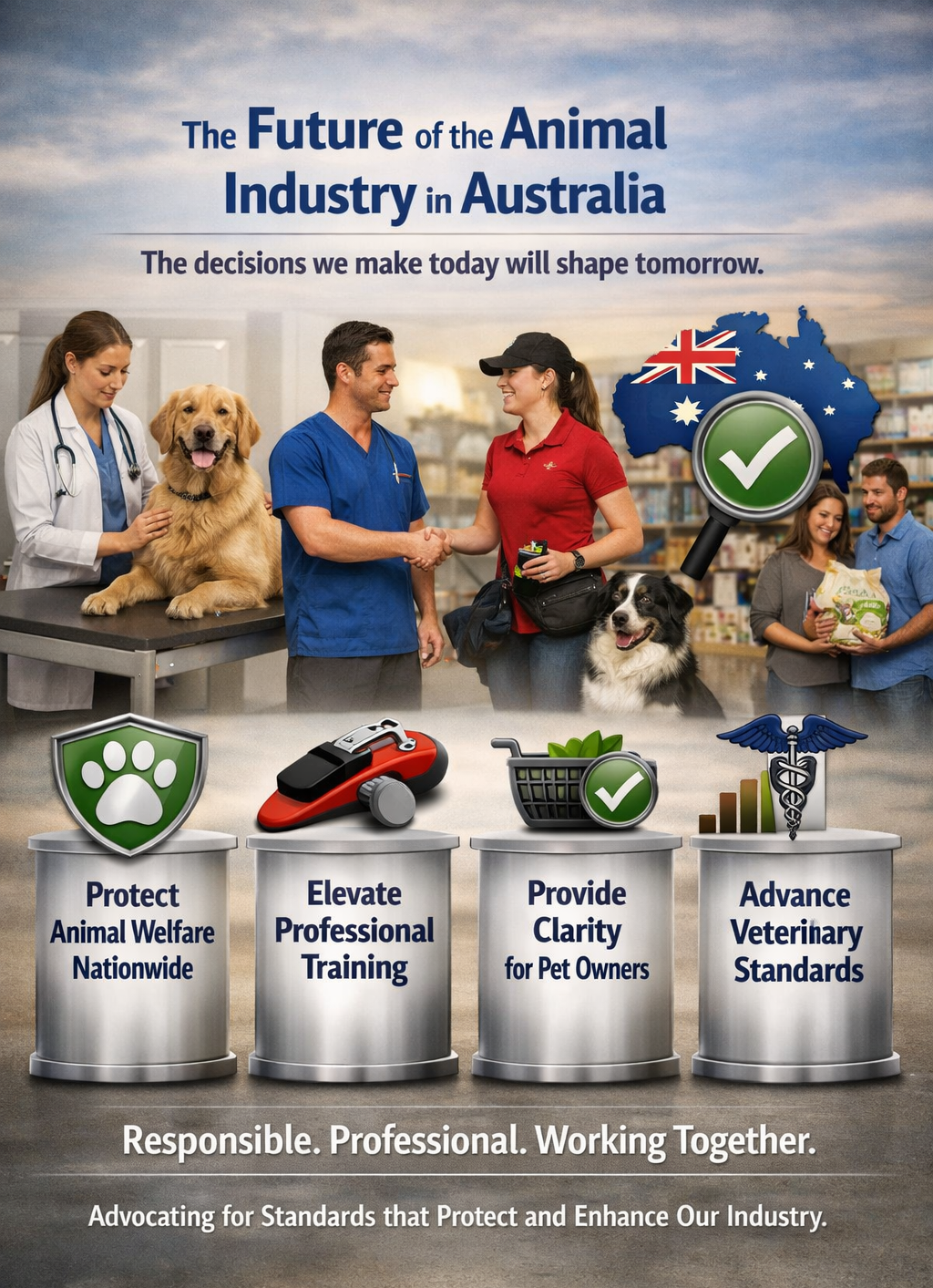
The future of the animal industry in Australia will be shaped by the decisions we make now. Regulation, when done well, is not a barrier—it is an opportunity.
An opportunity to:
- Protect animal welfare at a national level
- Elevate the professionalism of the workforce
- Provide clarity and confidence to consumers
- Ensure the industry continues to grow with integrity
As an industry, we have a responsibility to advocate for standards that reflect the value of the work we do—and the lives entrusted to our care.
By: Kylie Gilbert – Animal Care Australia Dog Representative. Published: June 2026 ACE Newsletter


