
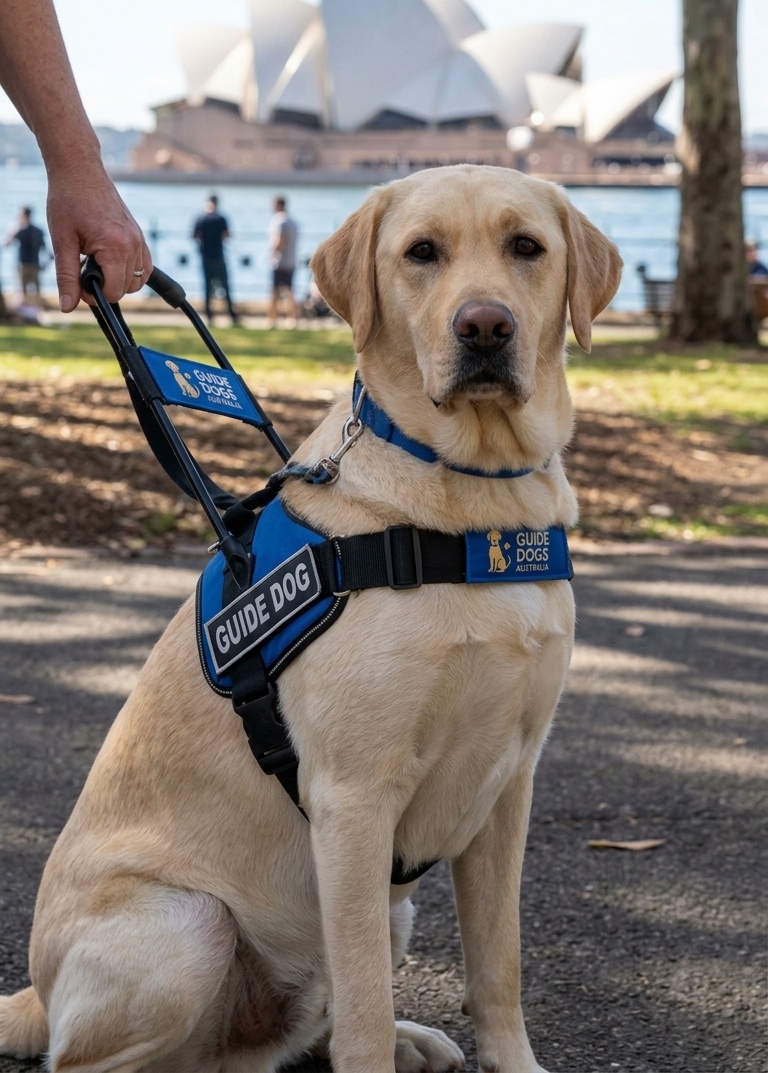
What the government proposed The discussion paper is an exploratory consultation. It does not set final fees, evidence rules or quarantine criteria. Department of Agriculture, Forestry & Fisheries is proposing:
- Ending the current fee waiver for the assistance animal import pathway, with full or partial fee-for-service models. The paper notes nearly half of arrivals occur outside business hours or need extra post-entry quarantine resources.
- Moving some assistance animals from home-based quarantine to departmental facilities, with case-by-case review.
- Revised verification and recognition requirements for assistance dogs, including how to prevent misleading claims that companion animals are assistance animals.
Animal Care Australia found the paper does not propose mandatory Assistance Dogs International (ADI) or International Guide Dog Federation (IGDF) accreditation.
Why the issue matters
- Assistance animals support people with disability. Fees, quarantine separation and recognition rules can affect disability access, daily functioning and work or medical travel.
- Australia’s assistance dog sector includes internationally accredited organisations, Australian professional providers, independent trainers and owner-trained teams. Rules that favour one group could shrink the sector or limit services, especially regional ones.
- Integrity matters too: misuse makes scrutiny harder for legitimate teams.
What Animal Care Australia identified
- Accreditation-exclusive recognition could advantage internationally accredited providers and disadvantage smaller Australian providers and owner-trained teams. It could also raise costs and cut the number of specialist and regional services.
- Two dogs with equivalent training and behaviour could be treated differently based only on who trained them.
- Full cost recovery could restrict international travel for work, medical or family reasons. Charities and smaller providers may not be able to absorb the added costs.
- Facility quarantine can disrupt disability support and animal welfare, though effects vary by animal and shouldn’t be assumed.
- Section 9(2) of the Disability Discrimination Act 1992 already recognises several pathways, including training that meets public hygiene and behaviour standards without international accreditation. Biosecurity still applies.
- The combined effect of fees, verification and quarantine changes may be larger than each measure alone.
- Breeding and development imports should not be treated as the same category as handler-accompanying assistance animals.
- The paper lacks the detail needed to quantify costs.
Animal Care Australia’s recommendations
- Keep existing fee exemptions and reject full fee-for-service. If partial cost recovery goes ahead, publish cost modelling and exempt essential disability adjustments, routine processing and biosecurity support, with capped charges and hardship provisions.
- Keep home-based quarantine as the default. Use facility quarantine only after individual biosecurity assessment, with disability and welfare support.
- Recognise ADI/IGDF accreditation as one valid evidence pathway, not a mandatory or exclusive one. Also recognise Australian professional providers and owner-trained teams.
- Use multiple evidence routes: organisational records, competent professional assessments, disability-related training evidence and public access assessments. Use independent assessment only where evidence gaps exist, and avoid duplicating reliable existing evidence.
- Accept relevant Australian qualifications and specialist experience as supporting evidence, but not as proof of specialist competence on their own.
- Use targeted, privacy-protective checks against misrepresentation. Don’t presume illegitimacy from invisible disability, owner training or lack of international affiliation.
- Publish clear eligibility, evidence, processing, safety and quarantine guidance, with reasons for decisions and accessible review.
- Assess cumulative impacts on providers, charities, regional services and people with disability before anything is finalised. Consult widely and provide transitional arrangements.
- Examine general import barriers for breeding and development programs separately.
Outcome Animal Care Australia is seeking
A modern import framework that protects biosecurity while keeping fair access for people with disability. Specifically:
- No substantive change to fees, recognition or quarantine until its financial, operational, disability access and welfare effects have been assessed and detailed proposals publicly consulted on.
- Equal opportunity for accredited, Australian professional and owner-trained teams to show their animals meet requirements, with no dog excluded solely because its trainer lacks international accreditation.
Animal Care Australia’s submission


